On this page
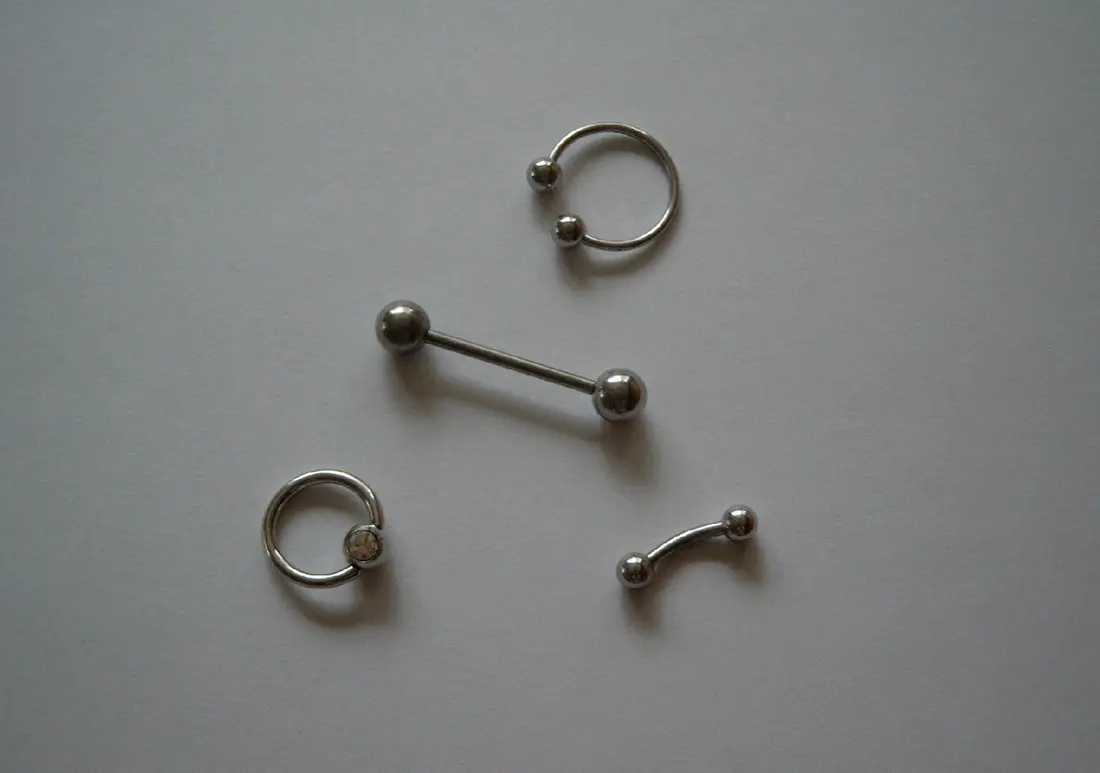
A downsize is the one jewelry change that should happen during healing. Almost every piercing starts on a post that is longer than you will need, and swapping it for a shorter one once the swelling has gone stops the spare length being knocked around for the rest of healing.
The table above lists when it is due for every piercing on this site. This page explains what it is and why it matters.
Why the starter jewelry is long
A new piercing swells. The jewelry has to be long enough to sit clear of the swollen tissue, or it will press into it. The APP says initial jewelry must be of appropriate length for your anatomy, and that jewelry which is too tight does not allow for air and blood circulation. So piercers fit a longer post at the start.
The catch is that swelling goes down. A few weeks in, that same post is longer than it needs to be, and the extra length sticks out and moves.
What skipping it risks
- More movement and pressure. The APP’s aftercare advice is to avoid friction, pressure from clothing and excessive motion of the area. A post that is longer than it needs to be has more room to swing and catch. See piercing bumps for what irritation looks like.
- More to snag on. Towels, hair, pillows and waistbands all catch on a long post. The APP warns that cloth towels snag on jewelry, and that sleeping directly on a healing cartilage piercing can cause irritation and even shift the piercing’s angle.
- Damage to teeth and gums. On an oral piercing, the APP says that once the swelling has subsided, it is vital to replace the original, longer jewelry with a shorter post or barbell to avoid damage to the teeth and gums.
How to tell it is time
Check the table above for the usual timing, then look for these:
- The swelling has gone, and the jewelry has more play than it did.
- The post or bar stands away from the skin instead of sitting close to it.
- The jewelry catches on things it did not catch on before.
- The piercing keeps getting irritated even though you are looking after it properly. Mention it to your piercer, since a shorter post may help.
Your piercer can tell by looking. Book the appointment when the swelling has gone rather than by the calendar alone.
Who should do it
A qualified piercer. The APP’s advice is that many piercings require a downsize before the piercing is healed, and that you should see a qualified piercer to perform downsizes or any jewelry changes during healing.
The reasons are practical:
- The channel is new tissue. It tears more easily than a healed one.
- Hands, jewelry and tools that have not been handled properly bring bacteria into a wound.
- The right length depends on your anatomy. A piercer measures it on you.
What to ask for
- The same thickness (gauge) as your starter jewelry.
- The same style, at least during healing. A flat-back stud stays a flat-back stud, and a curved barbell stays a curved barbell.
- Jewelry that meets the APP standard. Its list of accepted materials includes implant-certified titanium (ASTM F-136), and it accepts both internally threaded and threadless jewelry. See threadless vs threaded and the materials guide.
- The right length, measured on you.
What it costs
Many studios include the first downsize in the price of the piercing, so ask when you book. Otherwise budget $10 to $30 plus the price of the shorter post. Piercing prices shows the full budget for each placement, and how to choose a piercer covers questions like this one.
Which piercings do not need one
There is nothing to downsize on a dermal: the anchor sits under the skin and only the top shows. The table shows “Not applicable” for dermals and the back dimple, which uses them.
After the downsize
The routine does not change: keep cleaning with sterile saline and leave the piercing alone. A downsize is not the finish line, and other jewelry changes wait until the piercing has healed. When can I change my cartilage piercing explains how to tell.
The times, in words
These are the typical ranges this site uses, counted in weeks after the piercing. The swelling, not the date, decides.
- Tongue: one to two weeks. Other oral piercings and most lip piercings: two to four, with a few at three to six.
- Earlobes: four to six weeks.
- Nose: four to eight weeks for a nostril, four to six for a septum, and eight to twelve for a high nostril, rhino or nasallang.
- Eyebrow: four to six weeks.
- Cartilage: six to ten weeks for most, four to eight for a tragus, and eight to twelve for a snug, an orbital or an industrial.
- Navel and nipple: eight to twelve weeks.
Frequently asked questions
What is a piercing downsize?
Swapping the longer post or barbell your piercing started with for a shorter one, once the initial swelling has gone. The starter jewelry is longer than you will need, to leave room for swelling. When the swelling drops, the spare length has more room to move and catch.
When should I downsize my piercing?
It depends on the piercing. Typical ranges are one to two weeks for a tongue, two to four for most lip piercings, four to six for an earlobe, four to eight for a nostril, six to ten for most cartilage, and eight to twelve for a navel or nipple. The table above gives the range for every piercing, and your piercer decides on the day by how far the swelling has gone.
Do I have to downsize?
For most piercings, yes. The Association of Professional Piercers (APP) says many piercings require a downsize before the piercing is healed. For oral piercings it calls a shorter post vital, to avoid damage to the teeth and gums.
Can I downsize a piercing at home?
The APP advises seeing a qualified piercer for downsizes and for any jewelry change during healing. A healing channel is fragile, and the new post has to be the right length for your anatomy.
Is a downsize the same as changing my jewelry?
No. A downsize is a like-for-like swap during healing: the same thickness and style, only shorter. Changing the style, such as a stud for a ring, waits until the piercing has healed.
Is a downsize free?
Many studios include the first one in the price of the piercing, so ask when you book. Otherwise budget $10 to $30 plus the price of the shorter post.
Sources
- Association of Professional Piercers - Suggested aftercare for body piercingshttps://safepiercing.org/aftercare/
- Association of Professional Piercers - Oral aftercarehttps://safepiercing.org/oral-aftercare/
- Association of Professional Piercers - Jewelry for initial piercingshttps://safepiercing.org/jewelry-for-initial-piercings/
This article is for education only and is not medical advice. If a piercing is hot, swollen, spreading redness, oozing yellow or green discharge, or you have a fever, see a doctor today.