On this page
A labret piercing sits centred below the lower lip, above the chin, passing through to exit inside the mouth against the lower gum. “Labret” also describes the flat-back stud style of jewelry used here and in many other lip and facial piercings, which is where some of the naming confusion around this piercing comes from.
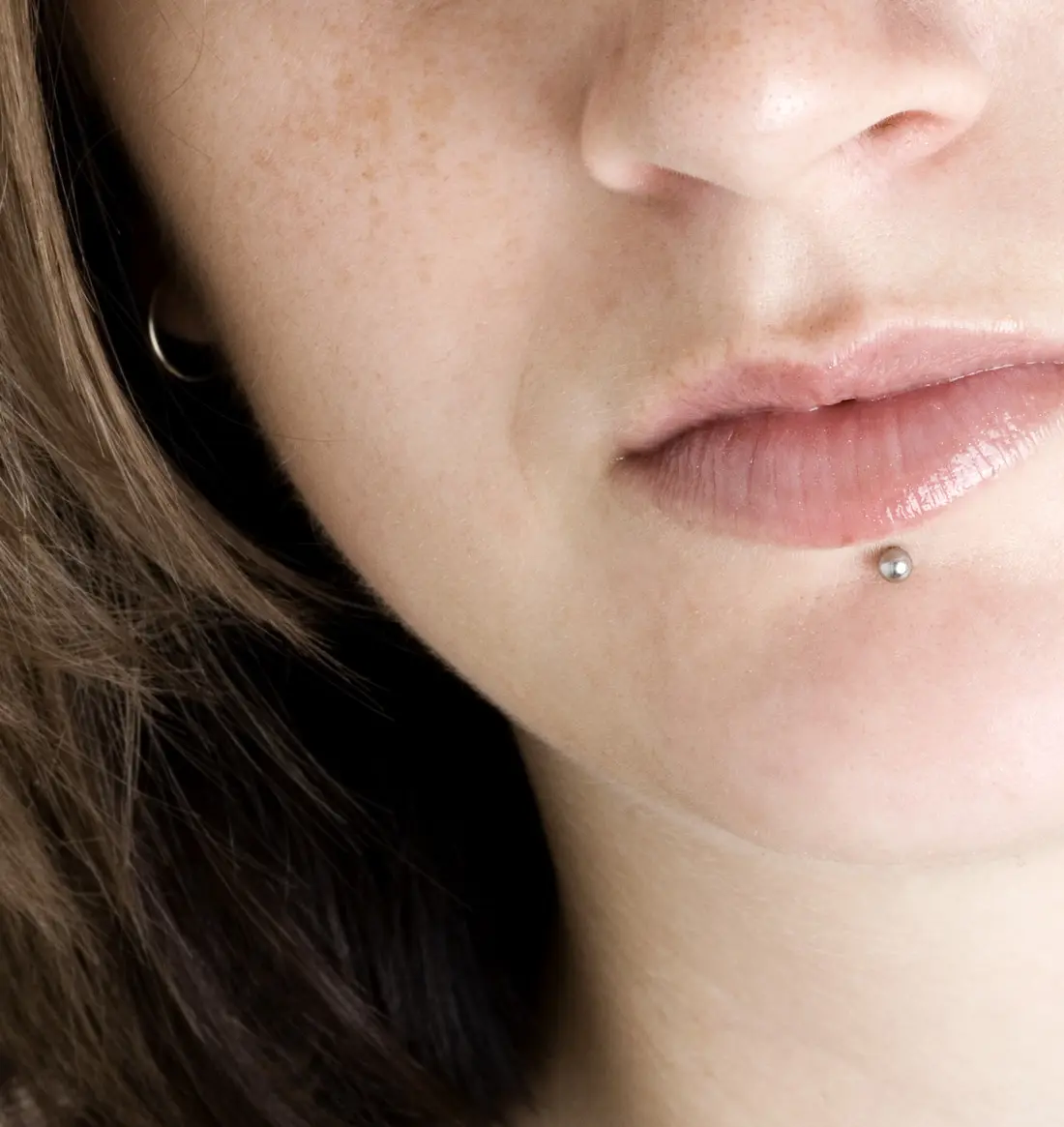
Photo by Nicholas Renaud via Wikimedia Commons, CC BY-SA 2.0.
It is one of twelve lip placements, and types of lip piercings compares all of them side by side.
Placement
The standard labret sits in the centre, roughly midway between the bottom of the lower lip and the top of the chin. Off-centre versions exist, generally called a side labret, placed to one side rather than centrally.
Whatever the position, the piercing exits inside the mouth, which is what makes the dental question the most important thing to get right on this page.
Pain
About 3 out of 10. The skin below the lip is thin and the needle passes in a moment. What people are less prepared for is the swelling over the following few days, which is more noticeable than the pain of the piercing itself.
Healing
Two to three months. As with other lip piercings, it looks and feels finished well before the channel has fully matured, and that gap is exactly when problems start if the jewelry is not managed correctly.
- Days 1-5: noticeable swelling, tenderness, some difficulty eating and speaking clearly.
- Weeks 2-6: swelling resolves, crusting on the outside, settling.
- Weeks 6-12: the channel finishes maturing.
Downsize as soon as swelling allows, generally within two to four weeks. The APP says a shorter post is vital once swelling subsides, to avoid damage to the teeth and gums, covered below. Piercing downsizing explains it for every placement.
The gum and tooth question
This is the part that matters over years, not weeks, and it is specific to any piercing that exits inside the mouth.
The flat disc on the inside of a labret stud should sit flat against the inner surface of the lip, not pressed into the gum line. If the post is too long, or the disc too large, it rests against the gum instead, and sustained contact there can cause gum recession over time, which a 2023 systematic review reports in lip piercings. The same jewelry can also chip the lower front teeth if it makes regular contact with them.
Reduce the risk by:
- Downsizing the post the moment swelling allows.
- Choosing a small, flat, smooth disc rather than a large decorative back.
- Having a piercer check the fit periodically, since lip shape and swelling change over the first months.
- Telling your dentist about the piercing so they can monitor your gum line at check-ups.
Aftercare
Like other piercings that exit in the mouth, a labret needs both an inside and an outside routine.
- Outside: sterile saline twice a day.
- Inside: rinse with alcohol-free mouthwash or saline after every meal, every drink other than water, and after smoking.
No sharing drinks, cutlery or kisses for the first couple of weeks, and keep the jewelry away from your teeth rather than clicking or playing with it. Full general routine in the aftercare guide.
Jewelry
Start with a flat-back labret stud, 16 gauge, around 10 mm post, in ASTM F136 implant-grade titanium, downsized to roughly 6 to 8 mm once swelling drops. Lip piercing jewelry covers studs, rings and what the dental research says.
Rings are the classic upgrade once fully healed, but they move constantly against the inside of the lip and teeth while healing, which is both uncomfortable and one more thing dragging on fresh tissue. Start with the flat back. Threadless or internally threaded jewelry keeps the post smooth going in and out. See the material guide.
The flat back guide covers post lengths and gauges by placement.
Vertical labret, briefly
A vertical labret is a related but distinct piercing: rather than a single point entering below the lip and exiting inside the mouth, it enters below the lip and exits through the lip itself, so both visible jewelry ends sit on the outside. It has its own healing considerations and is not the same aftercare or jewelry situation as a standard labret. Ask your piercer specifically if this is the look you want, since the two are often confused.
Problems
Gum irritation or recession is the labret’s specific long-term risk, covered above. If you notice gum sensitivity, redness, or the gum pulling back near the piercing, see your dentist.
Irritation bumps on the outside, usually from a post that needs downsizing or from makeup or skincare near the piercing, respond the same way any irritation bump does. See piercing bump vs keloid.
Infection near the mouth needs prompt attention: spreading redness, thick coloured discharge, swelling that increases after the first week, difficulty swallowing, or fever means a doctor the same day.
A lump that spreads beyond the piercing and keeps growing over months is a different problem: see the keloid guide.
Cost
$30 to $70 for the piercing in a US studio, plus $20 to $60 for a titanium flat-back stud.
Frequently asked questions
Where is a labret piercing?
Centered below the lower lip, above the chin, exiting inside the mouth against the lower gum. The name is also used generally for the flat-back stud style of jewelry used in many lip and facial piercings.
Does a labret piercing hurt?
About 3 out of 10. The lip and surrounding skin are thin, so the needle passes quickly. Swelling in the first few days is more noticeable than the initial pain.
How long does a labret piercing take to heal?
Two to three months. It looks settled sooner, which is exactly when a long post left inside the mouth starts doing real damage to the gum, so downsizing on schedule matters.
Does a labret piercing damage your gums?
It can, if the flat back sits pressed into the gum line rather than flat against the inside of the lip. A well-fitted, flat, smooth disc and a piercer who checks the fit periodically substantially reduce the risk.
What is a vertical labret?
A different piercing that enters below the lip and exits through the lip itself rather than a single flat entry into the mouth, so both visible ends sit outside. It has a different healing profile and is not covered on this page.
Can I wear a hoop instead of a stud in a labret piercing?
Only once fully healed. A ring moves constantly against the inside of the lip and the front teeth while healing, which is uncomfortable and slows things down. Start with a flat-back stud and consider a ring later if you want the look.
Sources
- Association of Professional Piercers - Oral aftercarehttps://safepiercing.org/oral-aftercare/
- Association of Professional Piercers - Suggested aftercare for body piercingshttps://safepiercing.org/aftercare/
- Association of Professional Piercers - Jewelry for initial piercingshttps://safepiercing.org/jewelry-for-initial-piercings/
- Mosaddad et al. (2023) - Oral complications associated with the piercing of oral and perioral tissues, and the awareness of the public and professionals: a systematic review. Diagnosticshttps://pmc.ncbi.nlm.nih.gov/articles/PMC10647284/
This article is for education only and is not medical advice. If a piercing is hot, swollen, spreading redness, oozing yellow or green discharge, or you have a fever, see a doctor today.