On this page
An irritation bump is the most common piercing complaint there is, and it has the most straightforward fix: find what is irritating the piercing and stop it.
That sounds obvious, and it is the step almost everyone skips. Most people search for something to put on the bump. Nothing you put on it will work while the cause is still there, and most of the things people put on it are themselves irritants.
Two placements get their own version of this guide, because their causes differ: nose piercing bumps and cartilage piercing bumps.
First, confirm what you are looking at
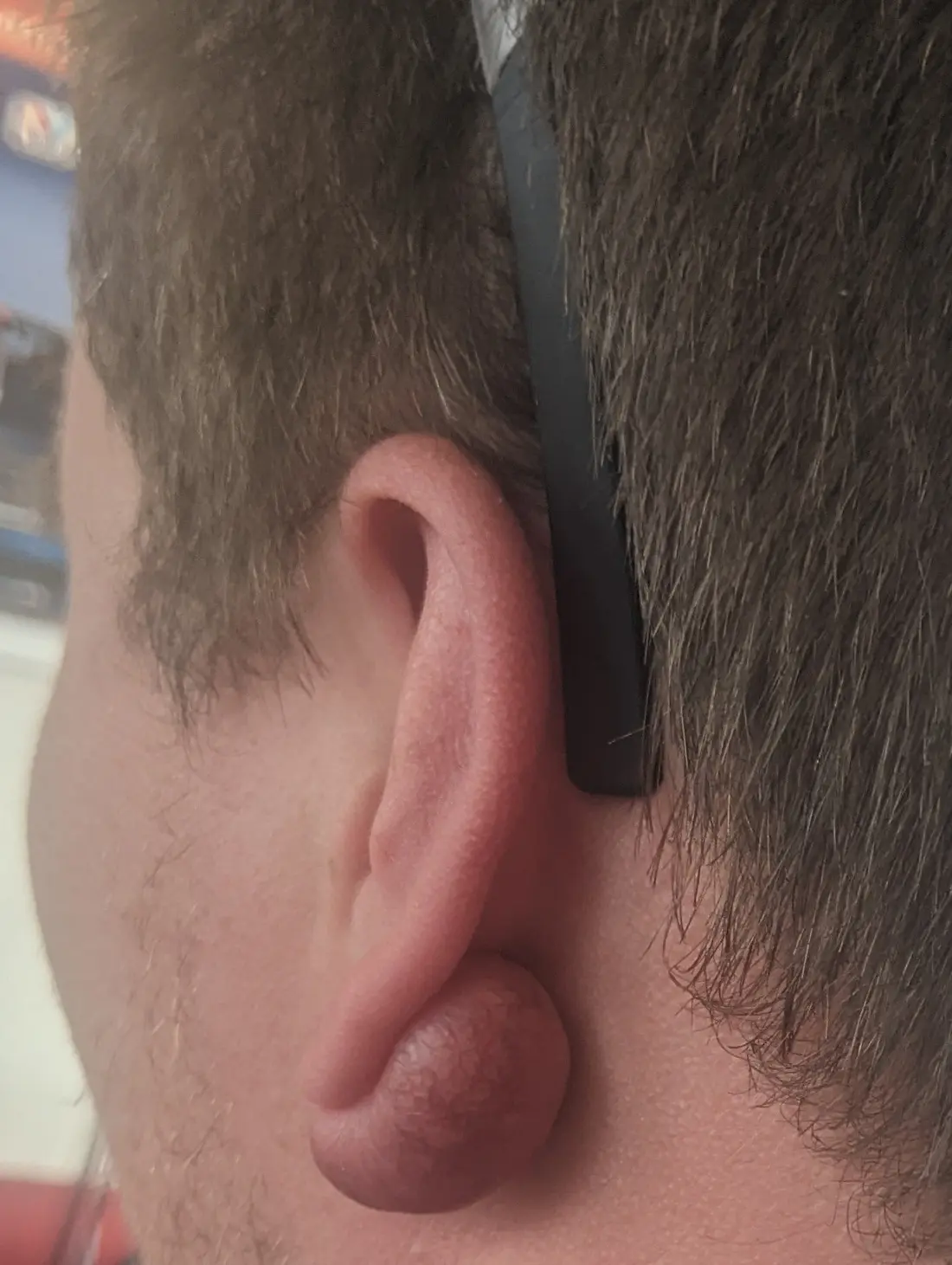
A true keloid, which is not what most piercing bumps are. Photo by Bobjgalindo via Wikimedia Commons, CC BY 4.0.
An irritation bump is a small, soft, pink or red lump immediately beside the jewelry, sometimes weeping a little clear fluid, tender but not hot. It stays within the boundaries of the piercing.
If instead the redness is spreading outward, the skin is hot, the discharge is thick and yellow or green, the swelling is increasing after the first week, or you have a fever, that is infection and it needs a doctor. See infected ear piercing.
If it is firm, rubbery, growing beyond the wound and has been enlarging for months, read piercing bump vs keloid.
The seven causes, and the fix for each
1. Sleeping on it. The APP says sleeping directly on a healing cartilage piercing can cause irritation and even shift the piercing’s angle. The pressure lasts for hours, and you are not aware of it.
Fix: sleep on the other side, or use a travel pillow with the hole positioned over your ear. This one change resolves a large share of cartilage bumps by itself.
2. A hoop fitted too early. Rings move constantly and lever on the channel with every head movement.
Fix: swap to a flat-back stud until the piercing is fully healed. Have a piercer do it.
3. A post that needs downsizing. Your initial jewelry was longer than necessary to allow for swelling. Once the swelling is gone, that spare length catches on hair, towels and clothing and levers the channel open.
Fix: a downsize appointment at four to ten weeks depending on the piercing. Often free at the studio that pierced you.
4. Poor-quality jewelry. Externally threaded posts drag a screw thread through the channel on every insertion. Gold plating wears through to base metal. Mystery “surgical steel” can release nickel.
Fix: implant-grade titanium (ASTM F136) or solid 14k or higher gold, threadless or internally threaded. See the material guide.
5. Harsh products. Tea tree oil, alcohol, hydrogen peroxide, antibiotic ointment, aspirin paste, antibacterial soap. All of these damage healing tissue.
Fix: stop everything except plain sterile saline. For a bump caused this way, stopping is the entire treatment.
6. Snagging and knocks. Towels, hairbrushes, jumpers, headphones, face-mask loops, seatbelts, pets.
Fix: identify the specific offender, which usually takes a day of paying attention, and work around it.
7. Changing jewelry too early. Forcing jewelry through a channel that has not matured tears it.
Fix: put the original jewelry back if you can, and wait out the full healing time. See when you can change a nose piercing.
The protocol
- Do not remove the jewelry. Removing it lets the surface close over inflamed tissue.
- Stop every product except sterile saline, 0.9% sodium chloride, twice a day.
- Work through the seven causes above and eliminate the ones that apply. Usually two or three do.
- See your piercer about jewelry length, style and material. Take the piercing to them rather than guessing.
- Wait four to eight weeks. Improvement is gradual.
- Reassess at six weeks. If nothing has changed after the causes are gone, go back to your piercer. A stubborn bump can mean the angle of the piercing is wrong, and jewelry will not fix an angle.
Why the home remedies do not work
Every one of these circulates widely, and every one causes more bumps than it cures.
| Remedy | What it actually does |
|---|---|
| Tea tree oil | Not saline, and the APP advises avoiding any harsh products |
| Aspirin paste | No evidence, irritates, and dries the tissue |
| Toothpaste | Abrasive and full of irritants |
| Hydrogen peroxide | Damages healthy healing tissue |
| Alcohol | Dries and kills new cells |
| Antibiotic ointment | Traps moisture and bacteria, does not reach inside the channel |
| Chamomile compress | Keeps the area damp and can introduce bacteria |
| Squeezing | Damages tissue, introduces bacteria, enlarges the bump |
Sterile saline is the only thing a healing piercing needs.
Which piercings get them most
Bumps are commonest where jewelry is pressed, moved or caught: cartilage ear piercings such as the helix, conch and rook, and the nostril, where nose bones and L-shaped studs cause a great many of them.
They are less common on earlobes, which heal quickly, and on the septum, which sits in soft tissue.
Preventing the next one
- Sterile saline only, twice a day.
- Hands off, no rotating.
- Never sleep on a healing piercing.
- Downsize on schedule.
- Implant-grade jewelry from the start.
- Flat-back studs while healing, hoops only once fully healed.
- Wait out the full healing time before changing jewelry.
The full aftercare guide covers the routine in detail.
If the bump is hot, spreading or leaking thick coloured discharge, it may be an infection rather than irritation: see irritated or infected piercing. Ask your piercer whether a downsize is due, too. Piercing downsizing has the timing for every placement.
Frequently asked questions
What causes a piercing bump?
Something mechanical or chemical is irritating the piercing. The usual causes are sleeping on it, a hoop fitted before healing, a post that needs downsizing, poor-quality jewelry, harsh cleaning products, snagging, or a jewelry change made too early.
How long does a piercing bump take to go away?
Four to eight weeks after the cause is removed, and sometimes longer on cartilage. It will not improve while the cause is still there, which is why treating the bump rather than the cause does not work.
Will a piercing bump go away on its own?
Only if whatever is causing it stops. Bumps do not resolve while you are still sleeping on the piercing or wearing the jewelry that caused it.
Can I pop a piercing bump?
No. An irritation bump is not a spot and there is nothing to release. Squeezing damages the tissue, introduces bacteria, and reliably makes it larger.
Does chamomile or tea tree oil help a piercing bump?
No. Tea tree oil is a strong irritant on broken skin and chamomile compresses keep the area damp and can introduce bacteria. Plain sterile saline is the only thing a healing piercing needs.
Should I change my jewelry because of a bump?
Possibly, but let a piercer decide. If the bump is caused by a post that is too long, a hoop, or a material you are reacting to, changing jewelry is the fix. Changing it for no reason adds another irritation.
Sources
- Association of Professional Piercers - Troubleshootinghttps://safepiercing.org/troubleshooting/
- American Academy of Dermatology - Caring for pierced earshttps://www.aad.org/public/everyday-care/skin-care-basics/tattoos/caring-for-pierced-ears
- Association of Professional Piercers - Jewelry for initial piercingshttps://safepiercing.org/jewelry-for-initial-piercings/
This article is for education only and is not medical advice. If a piercing is hot, swollen, spreading redness, oozing yellow or green discharge, or you have a fever, see a doctor today.