On this page
Good aftercare is mostly about what you stop doing. A piercing is a wound your body already knows how to close, and the fastest route to a healed piercing is to keep it clean, keep it still, and otherwise leave it alone.
The advice below comes down to four things: do not over-clean it, use only the right products, avoid pressure and movement, and do not change the jewelry early.
The routine
- Wash your hands. Every time, before you go near it.
- Spray sterile saline on the front and back of the piercing.
- Pat dry with clean disposable gauze. The APP says cloth towels should be avoided because they can harbor bacteria and snag on jewelry.
- Do this twice a day. Morning and evening is enough.
That is the entire routine. No soaking, no scrubbing, no rotating, no removing the jewelry to clean it.
What to use
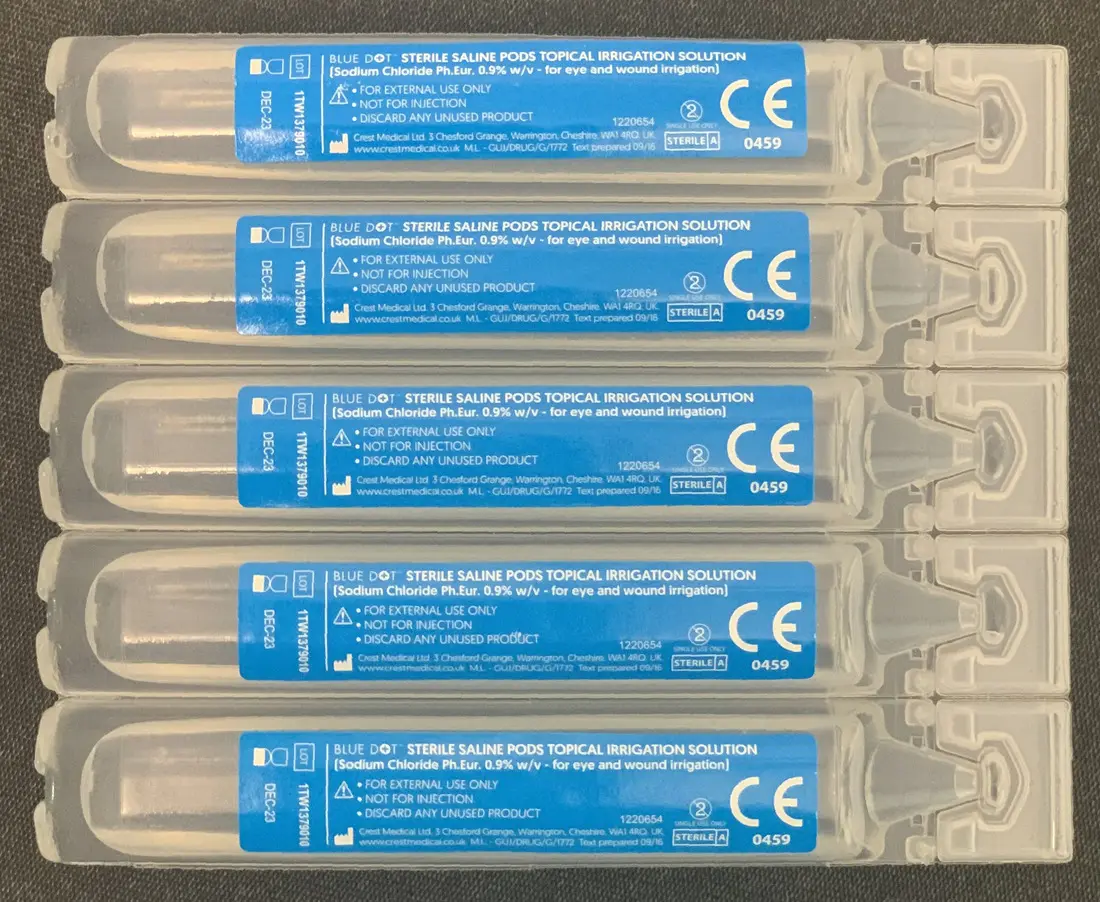
Photo by Whispyhistory via Wikimedia Commons, CC BY-SA 4.0.
Sterile saline wound wash, 0.9% sodium chloride. Buy the pressurised can sold for wound care. Check the ingredients: it should list sodium chloride and water, nothing else. Saline with added ingredients, contact lens solution and homemade salt mixtures are all worse options, and homemade sea-salt soaks are usually mixed too strong, which dries the tissue. Piercing aftercare products explains how to read the label.
For oral piercings, add a rinse of alcohol-free mouthwash or saline after eating, after drinking anything but water, and after smoking.
What to avoid, and why
| Do not use | Why |
|---|---|
| Rubbing alcohol | The APP says it can damage cells |
| Hydrogen peroxide | The APP says it can damage cells |
| Antibiotic ointment | The APP says ointments prevent the air circulation a piercing needs |
| Tea tree oil | Not saline, and the APP advises avoiding any harsh products |
| Antibacterial or scented soap | The APP advises against antibacterial soap and calls it outdated care |
| Aspirin paste | Not saline, and not something the APP recommends |
| Chamomile compresses | Not saline, and not something the APP recommends |
If you have already been using any of these and have a bump, stopping is the obvious first step.
The five habits that actually matter
Do not touch it. Not to check it, not to turn it, not to show a friend. The APP says to wash your hands thoroughly before cleaning or touching a piercing for any reason.
Do not rotate it. The APP says moving or rotating jewelry is not necessary during cleaning and may actually irritate the piercing. The NHS’s page on infected piercings suggests gently turning the jewellery while cleaning, so advice differs. We follow the APP.
Do not sleep on it. The APP says sleeping directly on a healing cartilage piercing can cause irritation and even shift the piercing’s angle. Sleep on the other side, or place a travel pillow on top of your pillow and put your ear in the opening. Piercing pillow explains how to set it up.
Do not change the jewelry early. The APP says to leave the initial jewelry in place for the entire healing process unless there is a problem with its size, style or material, and to see a qualified piercer for downsizes and any change during healing.
Do downsize on time. Your initial jewelry is deliberately longer than you need, to leave room for swelling. Once the swelling has gone, at roughly four to ten weeks depending on the piercing, that spare length becomes a lever that catches on everything. Go back and have a shorter post fitted. Many studios do the first downsize free. Piercing downsizing has the timing for every piercing.
Daily life
Showering is good for a piercing. Warm water softens crust and rinses it away. Let the water run over it, keep shampoo and conditioner rinsed off, and finish with saline.
Baths, pools, hot tubs, lakes and the sea are not. Wait until fully healed. Swimming with a new piercing sets out what the sources say and how to cover a piercing if you must.
Exercise is fine as long as the piercing is not being moved or pressed. A navel piercing and core work do not mix. Wash off sweat with clean water and follow with saline.
Makeup, hair products, fake tan, lotions and sunscreen should all stay off a healing piercing. Apply around it, and rinse with saline afterwards.
Clothing matters more than people expect. Waistbands press on navel piercings, jumpers hook on ear jewelry, hoodies catch eyebrow bars. Pull clothes carefully over your head while healing. How to clean a belly button piercing covers the navel.
Sleep is when you cannot control pressure on a piercing. For ear cartilage piercings, the APP suggests a travel pillow on top of your pillow, with the ear in the opening.
Oral piercings
Tongue, lip and other oral piercings heal in a wet, bacteria-rich environment and need a different routine.
- Rinse with alcohol-free mouthwash or saline after every meal, every drink other than water, and after smoking.
- Expect noticeable swelling for the first three to five days on a tongue piercing. Cold water and ice help.
- Avoid spicy, acidic, very hot and very salty food while swelling is at its worst.
- Keep the jewelry away from your teeth. The APP says playing with the jewelry can cause permanent damage to the teeth and gums over the long term.
- Do not share drinks, cutlery or kisses in the first weeks.
What normal healing looks like
| Stage | When | What you see |
|---|---|---|
| Inflammatory | Days 0-7 | Redness, swelling, warmth, tenderness, clear or straw-coloured fluid |
| Proliferative | Weeks 2-12 | Swelling drops, crust on the jewelry, itching, appears healed |
| Maturation | Months 3-12 | Looks finished from outside while the channel toughens internally |
Clear or slightly whitish fluid that dries into a crust is normal. It is lymph, not pus. So is itching, which usually appears in the middle stage as new tissue forms.
The APP warns that a piercing may seem healed before the healing process is actually complete. At two months a cartilage piercing can look healed and not be. Check the healing time chart for the real timeline for yours.
When to get help
See a piercer if the jewelry is too tight or too loose, the piercing sits at a new angle, a bump appears, or you cannot get jewelry back in.
See a doctor the same day if you have any of these:
- Skin hot to the touch, with redness spreading outward from the piercing
- Thick yellow or green discharge, or a foul smell
- Swelling that increases after the first week rather than decreasing
- Severe or throbbing pain
- Fever, chills, or feeling generally unwell
- Red streaks running away from the site
Leave the jewelry in unless a clinician tells you to remove it. The APP warns that removing jewelry in the presence of an infection may result in an abscess, so quality jewelry should stay in place so the infection can drain. Irritated or infected piercing helps you tell the two apart, and how to treat an infected piercing covers what to do.
For a lump rather than an infection, start with piercing bump vs keloid, because irritation bumps and keloids need opposite responses.
Frequently asked questions
What should I clean a new piercing with?
Sterile saline wound wash, 0.9% sodium chloride, ideally in a pressurised can whose only ingredient is saline. Spray it on the piercing twice a day. For most piercings nothing else is needed at all.
Can I use alcohol or hydrogen peroxide on a piercing?
No. The APP advises avoiding cleaning with alcohol, hydrogen peroxide, antibacterial soaps, iodine or any harsh products, because they can damage cells, and says to avoid ointments because they prevent the air circulation a piercing needs. Tea tree oil is not on the APP's list of what to use.
Should I twist or rotate my piercing?
No. The APP says moving or rotating jewelry is not necessary during cleaning and may actually irritate the piercing, and to not twist, spin or rotate it during healing. The NHS's page on infected piercings suggests gently turning the jewellery while cleaning, so advice differs. We follow the APP.
How long do I need to keep doing aftercare?
For the full healing time of that piercing, which ranges from six weeks for an earlobe to twelve months for cartilage or a navel. The APP warns that a piercing may seem healed before the healing process is actually complete.
Can I swim with a new piercing?
Not until it is fully healed. The APP says to avoid submerging a healing piercing in lakes, pools, oceans and hot tubs, or to protect it with a waterproof transparent film dressing. It says showers tend to be safer than baths.
What is the crust on my piercing?
Dried lymph fluid, which is a normal part of healing. The NHS advises against picking at crusting, and the APP says to gently remove crusty debris when you dry the piercing.
Do I need to clean it more than twice a day?
No. Twice a day is the routine this guide uses. The APP does not give a number, and it lists vigorous cleaning among the things to avoid, along with friction, pressure and playing with the jewelry.
Sources
- Association of Professional Piercers - Suggested aftercare for body piercingshttps://safepiercing.org/aftercare/
- Association of Professional Piercers - Oral aftercarehttps://safepiercing.org/oral-aftercare/
- American Academy of Dermatology - Caring for pierced earshttps://www.aad.org/public/everyday-care/skin-care-basics/tattoos/caring-for-pierced-ears
- Mayo Clinic - How to treat a piercing infectionhttps://www.mayoclinic.org/healthy-lifestyle/adult-health/expert-answers/ear-piercing-infection/faq-20452841
This article is for education only and is not medical advice. If a piercing is hot, swollen, spreading redness, oozing yellow or green discharge, or you have a fever, see a doctor today.