On this page
A nipple piercing passes through the base of the nipple, usually horizontally, with a barbell sized to the person’s own anatomy. It works for most nipple shapes and sizes, and it is slower and more demanding than almost any other common piercing, for reasons that are entirely about daily life rather than the tissue itself.
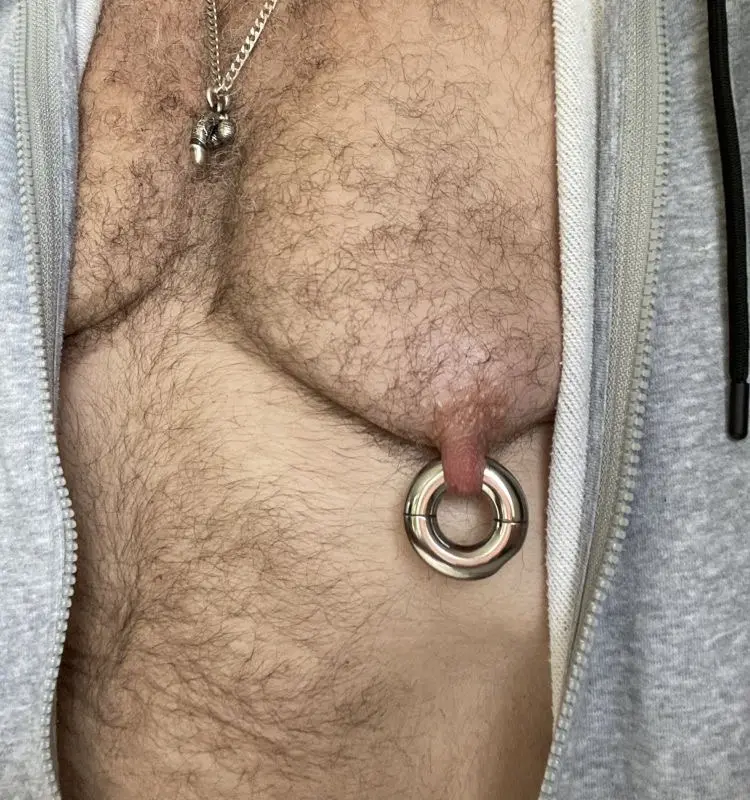
Photo by NipBreizh via Wikimedia Commons, CC0.
Anatomy
Nipple size and shape vary widely, and a good piercer measures rather than assumes. Most nipples can be pierced safely; what changes between people is the length and gauge of the initial jewelry needed to clear swelling without being unnecessarily long afterward.
Inverted or flat nipples need individual assessment. Some can be pierced successfully, sometimes with the piercing helping hold the nipple in a more everted position over time; others are not suitable candidates. This is a case where a photograph is not enough and an in-person consultation matters.
Pain
About 6 out of 10, among the more painful common piercings. The area is dense with nerve endings and the tissue is thicker than its appearance suggests, so the pinch is sharp rather than the quick sting of an ear piercing. Expect throbbing for the rest of the day and tenderness that can last a couple of weeks.
Healing
Six to twelve months, often the full year. The tissue itself is not unusually slow to heal; what extends the timeline is constant contact. A nipple piercing is touched by a bra, a shirt, a seatbelt in some positions, and any physical activity, all day, every day.
- Weeks 1-4: significant swelling, tenderness, clear or straw-coloured discharge, sensitivity to any contact.
- Months 2-6: crusting, less swelling, looks settled while still healing underneath.
- Months 6-12: the channel finishes maturing.
Downsize at eight to twelve weeks, once swelling has dropped. An overlong bar catches on clothing and bedding constantly, and the APP advises avoiding friction and pressure from clothing while a piercing heals. How long a nipple piercing takes to heal covers the stages and why the figures vary. Piercing downsizing explains it for every placement.
How long it can be left empty, which depends far more on how long you have had it than on where it is, is in how long a piercing takes to close.
Bras, clothing and exercise
This is the part that determines how healing actually goes.
- Wear a soft, seamless bra without underwire while healing, or none at all if that is more comfortable. Underwire presses directly on the piercing.
- Loose, soft fabrics against the area reduce friction. Tight synthetic tops rub constantly.
- Exercise that involves running or high-impact movement causes repeated friction and impact. Expect to modify activity, and wear supportive, seamless sports bras.
- Sleeping face down or on the side presses directly on a fresh nipple piercing. A looser sleep bra can help some people.
- Sexual activity and contact should wait until your piercer confirms the piercing is well settled, and be gentle even after that during the first months.
Aftercare
Sterile saline twice a day, hands off, no rotating. The full aftercare guide covers the routine.
One nipple-specific point: expect more visible discharge and crusting here than on most piercings, simply because the area sees more friction. That is normal as long as it stays clear to straw-coloured rather than thick or coloured.
Jewelry
Start with a straight or curved barbell, 14 gauge, in ASTM F136 implant-grade titanium, sized to your individual anatomy by the piercer. Length matters enormously: too short and swelling causes it to embed; too long after swelling drops and it catches on everything.
Captive bead rings are the classic look for a healed nipple piercing, but they move more than a barbell and are harder to keep still while healing. Save the ring for later. Threadless or internally threaded only. See the material guide.
A retainer keeps the channel open when you need to hide it, or to remove metal for a scan.
Nipple piercing jewelry covers how the length is chosen, when a ring is safe, and what suits bras and exercise.
Pregnancy and breastfeeding
This is one of the most common questions about this piercing, and the honest answer has a few parts.
A well-placed, fully healed nipple piercing usually does not damage the milk ducts, and most people who have one are able to breastfeed. That said:
- Remove the jewelry for each feed. It is a choking and gagging risk for an infant and can also cause milk to leak unpredictably through the extra channel.
- During pregnancy, some people keep the jewelry in and some remove it as the breast changes shape; either is reasonable, and a flexible retainer is an option if you want to keep the channel open.
- If you plan to get pierced and also plan a pregnancy soon, consider waiting until after breastfeeding, since a healing piercing and nursing do not combine well.
- Talk to a lactation consultant or your doctor about your specific situation, particularly if milk flow from that duct seems reduced, which is uncommon but worth checking rather than assuming.
Rejection and migration
Nipple piercings can migrate, most often from jewelry that is too short, low-quality metal, or sustained pressure from tight or underwired bras. Watch for:
- The visible bar length between the ends shortening.
- Skin over the bar thinning or looking shiny.
- Renewed tenderness after the piercing had settled.
See a piercer promptly if you notice any of these. Removing jewelry before it tears through leaves a smaller mark than letting migration run its course.
Problems
Irritation bumps, usually from friction or a bar that needs downsizing, resolve the way any irritation bump does: remove the cause, keep up saline, give it time. See piercing bump vs keloid.
Infection here should be taken seriously and promptly: spreading redness, heat, thick yellow or green discharge, increasing swelling after the first week, or fever means a doctor the same day, with the jewelry left in. Infected nipple piercing explains how to tell irritation from infection, and what a lump in the breast means.
A lump that spreads beyond the piercing and keeps growing over months is a different problem: see the keloid guide.
Cost
$40 to $80 per piercing in a US studio, plus $30 to $100 for a properly sized titanium barbell. Many studios price a pair together if you are getting both done.
Frequently asked questions
Does a nipple piercing hurt?
About 6 out of 10, one of the more painful common piercings, though it is brief. The area is sensitive and the tissue is denser than it looks, so the pinch is sharp and the ache afterward can last longer than an ear piercing's.
How long does a nipple piercing take to heal?
Six to twelve months, and often the full year. It sits somewhere clothing touches constantly, which slows healing as much as the tissue itself does.
Can you get a nipple piercing if you have inverted nipples?
Sometimes, and it needs a proper assessment first. A piercing can occasionally help hold a nipple in a more everted position, but not every degree of inversion is suitable, and a piercer should examine you rather than guess from a description.
Can I breastfeed with a nipple piercing?
Most people can, after the piercing is fully healed and with the jewelry removed for each feed. A properly placed piercing does not usually damage the milk ducts, but plan to remove the jewelry during pregnancy and nursing and discuss timing with a lactation consultant or your doctor.
What jewelry is used for a nipple piercing?
A straight or curved barbell in 14 gauge implant-grade titanium is standard. Captive rings are popular once healed, but a barbell is easier to keep still while healing, which matters more here than the final look.
Do nipple piercings reject?
They can, particularly with a barbell that is too short, jewelry that is not implant grade, or a lot of pressure from tight or underwired bras. Watch for the usual migration signs: thinning skin over the bar, and the visible length between the ends getting shorter.
Sources
- Association of Professional Piercers - Suggested aftercare for body piercingshttps://safepiercing.org/aftercare/
- Association of Professional Piercers - Troubleshootinghttps://safepiercing.org/troubleshooting/
- Association of Professional Piercers - Jewelry for initial piercingshttps://safepiercing.org/jewelry-for-initial-piercings/
This article is for education only and is not medical advice. If a piercing is hot, swollen, spreading redness, oozing yellow or green discharge, or you have a fever, see a doctor today.