On this page
A nostril piercing passes through the soft tissue at the side of the nose, usually just above the crease where the nostril meets the cheek. It is one of the most popular piercings in the world and one of the most commonly done badly, almost entirely because of the jewelry that gets put in it.
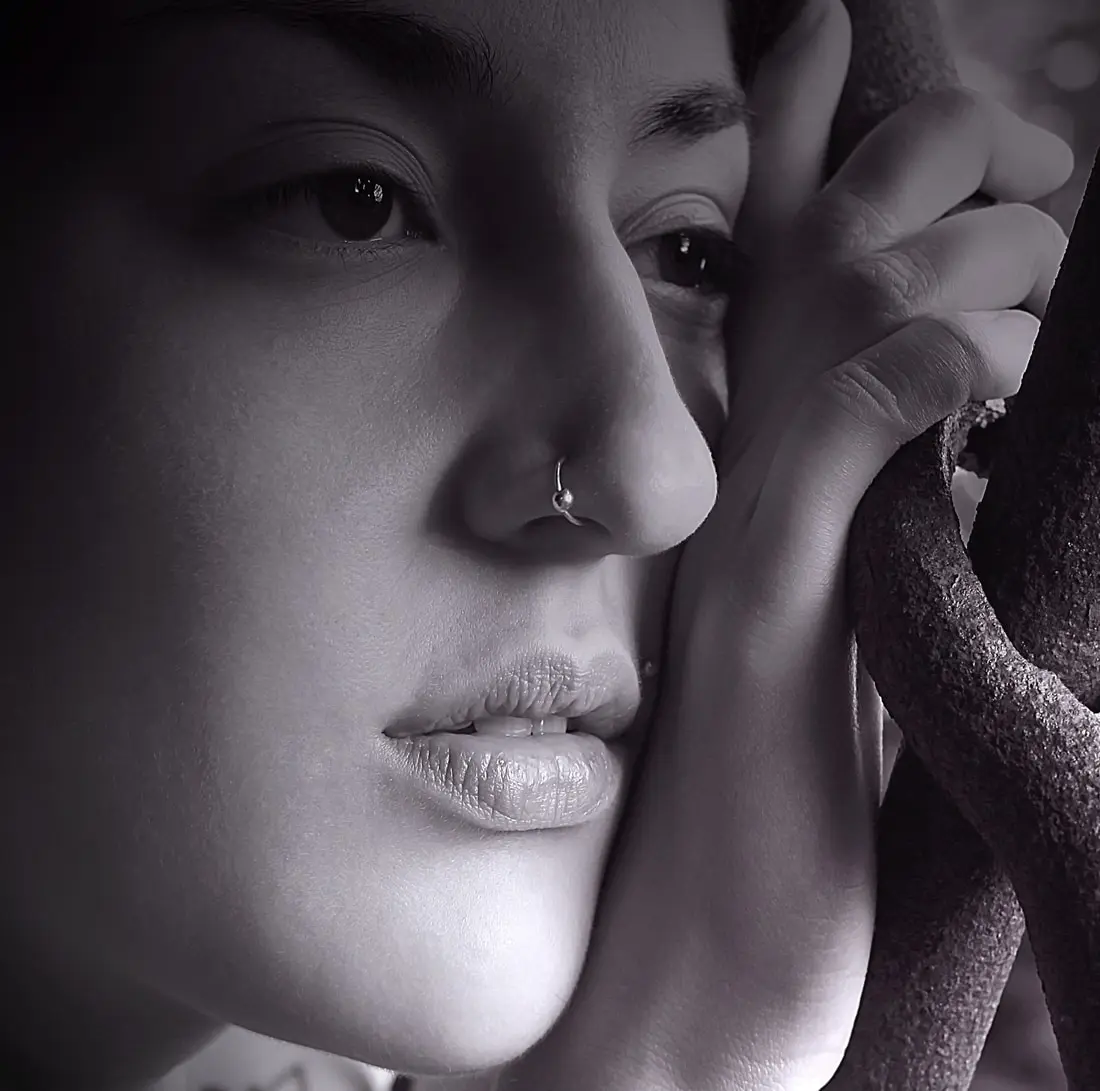
Photo by Andrea Miceli Rovito via Wikimedia Commons, CC BY 2.0.
Placement
The standard position sits in the natural crease line, high enough to clear it. Where exactly depends on the shape of your nose, and a good piercer will mark a dot and have you look in a mirror from the front and from a three-quarter angle before going ahead.
Variations worth knowing:
| Name | Where | Notes |
|---|---|---|
| Standard nostril | Above the nostril crease | The default |
| High nostril | Higher up the side of the nose, near the bridge | Slower to heal, needs a flat-back stud permanently |
| Double nostril | Two on the same side | Planned together; some piercers add the second once the first has settled |
| Paired nostrils | One on each side | Often linked with a chain once healed. Also covered on the double nostril page |
| Nasallang | Through both nostrils and the septum with one bar | An advanced piercing, not a beginner option |
Pain
About 4 out of 10. A quick, bright sting, and your eyes will water whether or not it hurt. That is a reflex from the nerves in the area, not a measure of pain, and it catches people off guard.
Afterwards it aches mildly for an hour or two and is tender to the touch for a week or so.
Healing
Four to six months. The outside seals fast, which creates the illusion that it is finished at four weeks. It is not. The channel through the tissue is thin and new, and the APP says to leave the initial jewelry in place for the entire healing process unless there is a problem with its size, style or material. How long a nose piercing takes to heal compares every nose placement, stage by stage.
- Week 1: swelling, tenderness, some clear discharge.
- Weeks 2-8: crusting around the stud, occasional itching.
- Months 2-6: looks completely healed, still maturing.
Downsize at four to eight weeks once swelling has gone, so the post is not standing proud of your nose where every towel and pillow will catch it. Piercing downsizing explains it for every placement.
How long it can be left empty, which depends far more on how long you have had it than on where it is, is in how long a piercing takes to close.
Jewelry, and why this matters more here than anywhere
Nostril jewelry comes in several styles. Three types you will be offered:
- Flat-back labret stud. A straight post with a flat disc inside the nostril. This is what a good piercer will use. It sits still, it does not press on the inside of the nostril, and it comes out and goes in cleanly.
- Nose bone. A straight post with a small ball fused on the end. To insert or remove it you have to force the ball through your channel. In a healed piercing it is merely unpleasant. In a healing one it tears the channel.
- L-shape or nose screw. A bent post. The bend rotates inside your nostril as you move, which means the piercing is never still, and getting it in and out involves corkscrewing metal through the wound.
Start with a flat-back labret in ASTM F136 implant-grade titanium, 18 gauge, around 8 mm. Threadless or internally threaded, so the post is smooth.
A hoop is possible once fully healed, but a hoop moves constantly and rests against the inside of the nostril, so it is a month-six decision at the earliest. See the material guide before buying anything gold-plated or unlabelled.
A retainer keeps the channel open when you need to hide it, or to remove metal for a scan.
Sizing is its own subject: nose ring sizes covers gauge, post length and hoop diameter. Nose piercing jewelry compares every style and what to wear at each stage.
The flat back guide covers post lengths and gauges by placement.
Aftercare
Sterile saline twice a day, hands off, no rotating. Full routine in the aftercare guide.
Nostril-specific practicalities:
- Face washing, makeup, moisturiser and cleanser all end up in the piercing. Work around it rather than over it, and rinse with saline afterwards.
- Blowing your nose while healing is uncomfortable and pushes discharge into the channel. Be gentle, and rinse afterwards.
- Glasses rest close to a high nostril placement.
- Sleeping face down can press the stud sideways through the tissue.
Problems
Irritation bumps are common on nostrils, but they are not inevitable. The APP’s aftercare advice points to what to rule out: friction, pressure, excessive motion, playing with the jewelry and a jewelry change before the piercing has healed. A nose bone or L-shape can add to the movement. Remove the cause and keep up saline. Do not apply tea tree oil, aspirin paste or other home remedies: the APP advises avoiding any harsh products. If it is hot, spreading or leaking thick coloured discharge, see a doctor. Read piercing bump vs keloid.
Losing the piercing. Nostril channels are short. If the jewelry comes out and stays out for a few hours in the first months, it can shrink enough that you cannot get it back in. Keep a titanium retainer or a spare stud somewhere accessible.
Infection. Less common than irritation, but the nose is a bacterial environment. Heat, spreading redness, thick coloured discharge, swelling that increases after the first week, or fever means see a doctor, and leave the jewelry in until they say otherwise.
A lump that spreads beyond the piercing and keeps growing over months is a different problem: see the keloid guide, or nose piercing keloid for how to tell one from an ordinary bump.
Nose piercing bumps covers the seven causes and the fix for each.
Cost
$30 to $70 for the piercing in a US studio, plus $25 to $100 for jewelry. Beware of very cheap deals that include a nose bone: you will be replacing it. How much is a nose piercing adds up the full first-year cost.
Frequently asked questions
How long does a nose piercing take to heal?
Four to six months for a nostril. It closes over on the outside within weeks, which is why so many people change the jewelry early and end up with a bump. The channel inside needs the full four to six months.
Does a nostril piercing hurt?
About 4 out of 10. A sharp sting for a second and your eyes will water, which is a reflex rather than a sign of pain. It is over almost immediately and settles to a mild ache.
When can I change my nose piercing?
After four to six months, and only if it has been calm for several weeks with no tenderness or discharge. If you want to swap earlier, have a piercer do it. Nostril channels are short and easy to lose.
What gauge is a nose piercing?
Most professional studios pierce a nostril at 18 gauge, which is 1.0 mm. Some pierce at 20 gauge, which is thinner and more prone to irritation and migration. Ask before you book if you care about wearing 18 gauge jewelry later.
Which side should I pierce?
Whichever you prefer. The old claims about left and right having different cultural or medical meanings do not translate into any practical difference. Consider which side you sleep on and which side you part your hair.
Why does my nose piercing have a bump?
Nearly always an irritation bump rather than a keloid. The usual causes are a nose bone or L-shaped stud, sleeping on it, changing jewelry too early, or knocking it while washing your face. Fix the cause and it usually resolves in four to eight weeks.
Sources
- Association of Professional Piercers - Suggested aftercare for body piercingshttps://safepiercing.org/aftercare/
- Association of Professional Piercers - Jewelry for initial piercingshttps://safepiercing.org/jewelry-for-initial-piercings/
- Association of Professional Piercers - Troubleshootinghttps://safepiercing.org/troubleshooting/
This article is for education only and is not medical advice. If a piercing is hot, swollen, spreading redness, oozing yellow or green discharge, or you have a fever, see a doctor today.