On this page
Rings and hoops are grouped as one category of jewelry, but “a ring” covers four genuinely different designs, and they open in four different ways. Getting the wrong one for your placement is how a five-minute jewelry change turns into a trip back to the studio.
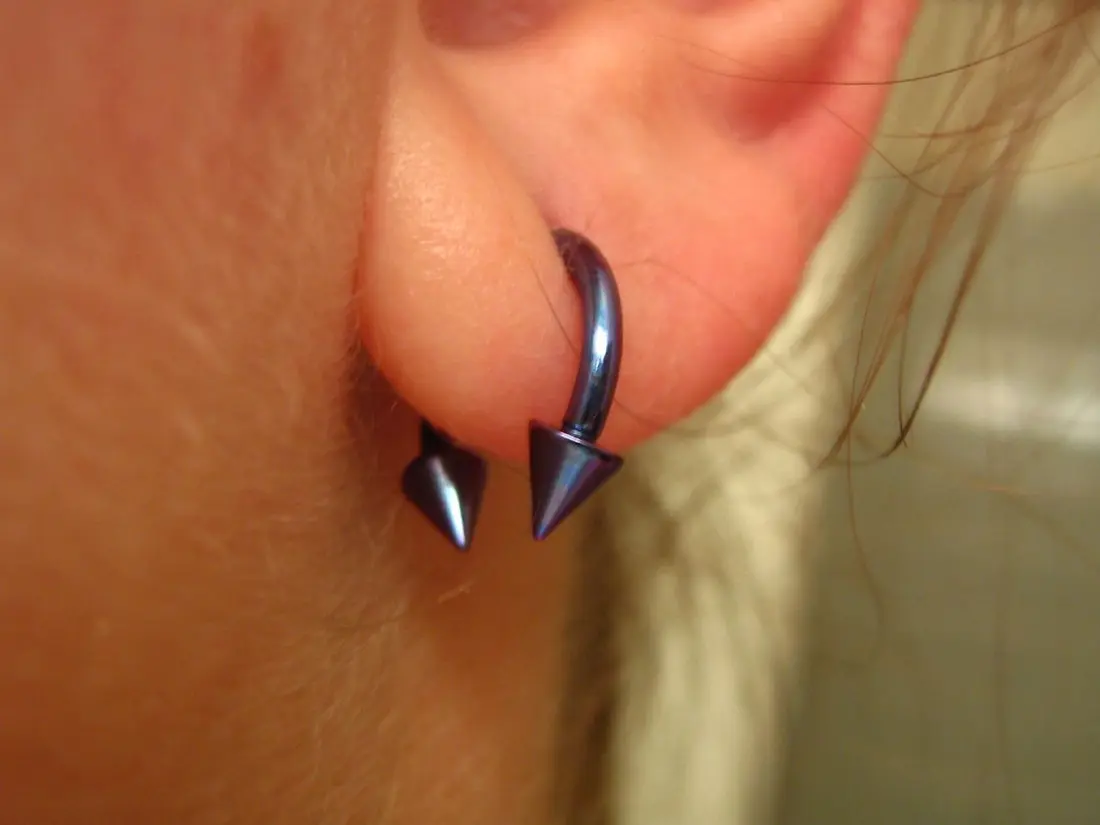
Photo by Lisa Brank via Wikimedia Commons, CC BY 2.0.
Captive bead ring (CBR)
The classic hoop: a ring with a small gap, held closed by a loose bead gripped under tension between the two ends.
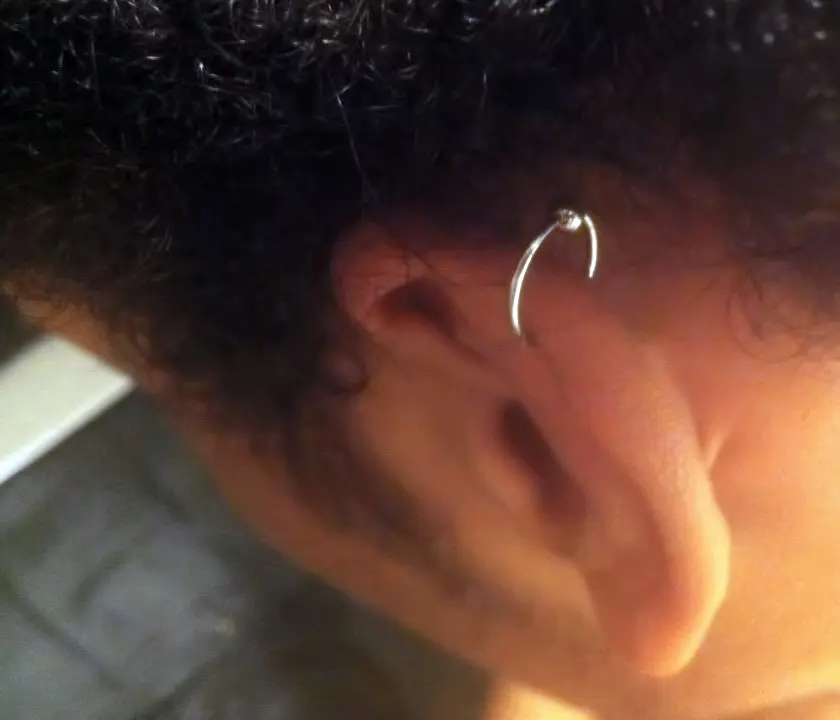
Photo by BrandonEmTee via Wikimedia Commons, CC0.
How it opens: ring-opening pliers spread the gap evenly, the bead comes free, and the same pliers compress the gap back down once the bead is replaced. Forcing it open by hand tends to either overshoot, flinging the bead, or bend the ring out of round.
Strengths: secure once closed, widely available, and the tension holding the bead means nothing is going to unclip itself accidentally the way a clicker’s hinge occasionally can.
Trade-off: you need the right pliers, or a piercer, to change it. Not something to attempt for the first time with a bent paperclip.
Seamless ring
One continuous piece of wire bent into a circle, with no bead and no visible join.
How it opens: by twisting the two ends apart laterally, sideways relative to the plane of the ring, not pulling them straight apart. Pulled the wrong way, a seamless ring deforms permanently rather than opening cleanly.
Strengths: the cleanest look of any ring style, since there is nothing to see at the join. Popular for septums and healed cartilage.
Trade-off: the twisting motion takes a little practice, and repeated opening and closing gradually work-hardens the metal at the join, making it more likely to snap or deform over time. A seamless ring is not designed to be opened and closed daily.
Clicker
A hinged ring, split at one point with a spring-loaded hinge, that snaps shut when pressed together, the way many clip-on style hoop earrings do.
How it opens: press the two sides apart at the hinge, no tools required. Closing it is just as simple: line it up and press until it clicks.
Strengths: by far the easiest ring style for a wearer to remove and refit themselves, which is why clickers have become the default recommendation once a placement is fully healed and someone wants to change their own jewelry day to day.
Trade-off: the hinge mechanism is a moving part, and a cheap one loosens with wear. A loose clicker can pop open on its own, which is not a risk with a captive bead ring or a seamless ring. Buy clickers from a source that states the alloy and stands behind the hinge.
Circular barbell (horseshoe)
A C-shaped bar, not a full circle, with a removable ball, spike or gem screwing onto each end.
How it opens: unscrew either end. No pliers, no twisting, no hinge.
Strengths: because it is not a closed loop, a circular barbell can sit through anatomy that would not suit a full ring, including surface areas and tighter curves. It is the standard shape for septum retainers and is common in nipple, eyebrow and daith placements.
Trade-off: externally threaded versions exist, where the screw thread sits on the outside of the post rather than inside the ball, and those drag a sharp thread through the channel every time they are changed. Confirm it is internally threaded, the same rule that applies to every other piece of jewelry. See the threading guide.
Which style suits which placement
| Placement | Common ring style once healed |
|---|---|
| Helix, conch, rook | Captive bead ring, seamless ring, or clicker |
| Daith | Circular barbell or clicker |
| Septum | Circular barbell (retainer style) or seamless ring. See septum piercing jewelry |
| Nostril | Small seamless ring or clicker, once healed. See nose piercing jewelry |
| Nipple | Circular barbell or captive bead ring. See nipple piercing jewelry |
| Eyebrow | Circular barbell. See eyebrow piercing jewelry |
None of these are worn in a fresh piercing. Every ring style is for a placement that has finished healing; a stud or a straight barbell is the standard while a channel is still settling, because rings rotate and swing and a healing piercing needs to stay still. The flat back guide covers the stud side of that, and the conch jewelry guide covers exactly this stud-to-ring transition for one specific placement in detail.
Sizing
Every ring style is sized the same way: gauge for thickness and inner diameter for how wide it sits once closed. Neither is guessable from a photo, and both depend on your specific piercing.
The gauge and size chart converts gauge to millimetres, and the jewelry size finder tool looks up the numbers for common placements. For anything nose-specific, nose ring sizes has the detail on diameter by placement.
Material matters as much as the style
Whichever shape you choose, the metal underneath it needs to be implant-grade titanium (ASTM F136), niobium, or solid 14k gold or higher. A beautifully designed seamless ring in an unspecified “surgical steel” or a plated alloy is still jewelry that can irritate a piercing or trigger a nickel reaction. The materials guide explains what each standard actually guarantees.
Getting it changed
If a ring will not open with reasonable, steady pressure using the correct tool for its style, stop rather than force it. A studio will change jewelry for a small fee or sometimes for free, and a bent ring or a bead lost down a sink is a more expensive problem than the visit would have been.
Frequently asked questions
What is the difference between a captive bead ring and a seamless ring?
A captive bead ring (CBR) has a small gap held shut by tension gripping a loose bead, opened by spreading the gap with ring-opening pliers. A seamless ring is one continuous piece with no visible join, opened by twisting the ends apart sideways rather than spreading a gap. Seamless rings look cleaner; captive rings are generally easier to fit without tools breaking.
Can I open a captive bead ring with my fingers?
You can, and it is how most people end up with a bead flying across the room or a ring bent out of shape. Ring-opening pliers spread the gap evenly and under control. Fingers apply force unevenly and often overshoot.
What is a clicker earring?
A hinged ring that opens on a spring-loaded hinge and snaps shut, the way a clip-on hoop earring does but for a piercing. It needs no tools and no twisting, which makes it the easiest ring style to fit and remove yourself once a piercing is healed.
What is a circular barbell used for?
Also called a horseshoe, it is a C-shaped bar with a removable ball or spike screwing onto each end. It is the standard shape for a septum retainer-style ring, and it is also common in nipple, eyebrow and daith piercings, anywhere a full circle would not sit well against the anatomy.
Why can't I wear a ring in a fresh piercing?
A ring rotates and swings with every movement, and a healing channel needs to stay still. Rings are for piercings that have finished healing; studs and barbells are the standard for anything still settling. The exceptions are placements like the septum and some navels, which are sometimes started with a ring shaped and fitted specifically for the fresh piercing.
How do I know what size ring I need?
Two numbers: gauge (thickness) and inner diameter (how wide the ring is once closed). Both depend on the placement and, for gauge, on what you were originally pierced at. The gauge chart and the jewelry size finder tool cover the numbers for specific placements.
Sources
- Association of Professional Piercers - Jewelry for initial piercingshttps://safepiercing.org/jewelry-for-initial-piercings/
- Association of Professional Piercers - Body Jewelry Verification Programhttps://safepiercing.org/body-jewelry-verification-program-2/
- Association of Professional Piercers - Suggested aftercare for body piercingshttps://safepiercing.org/aftercare/