On this page
Nickel is the most common contact allergen in the world, and piercing is the most common way people acquire the allergy. A healing wound in prolonged contact with nickel-releasing metal is close to a textbook sensitisation setup, which is why so many people trace their allergy to a childhood ear piercing.
This page covers three things: how to tell a nickel reaction from the two things it is confused with, why the metals sold as safe often are not, and what to wear instead.
Allergy, irritation or infection
They overlap, and the treatments do not.
| Nickel allergy | Irritation | Infection | |
|---|---|---|---|
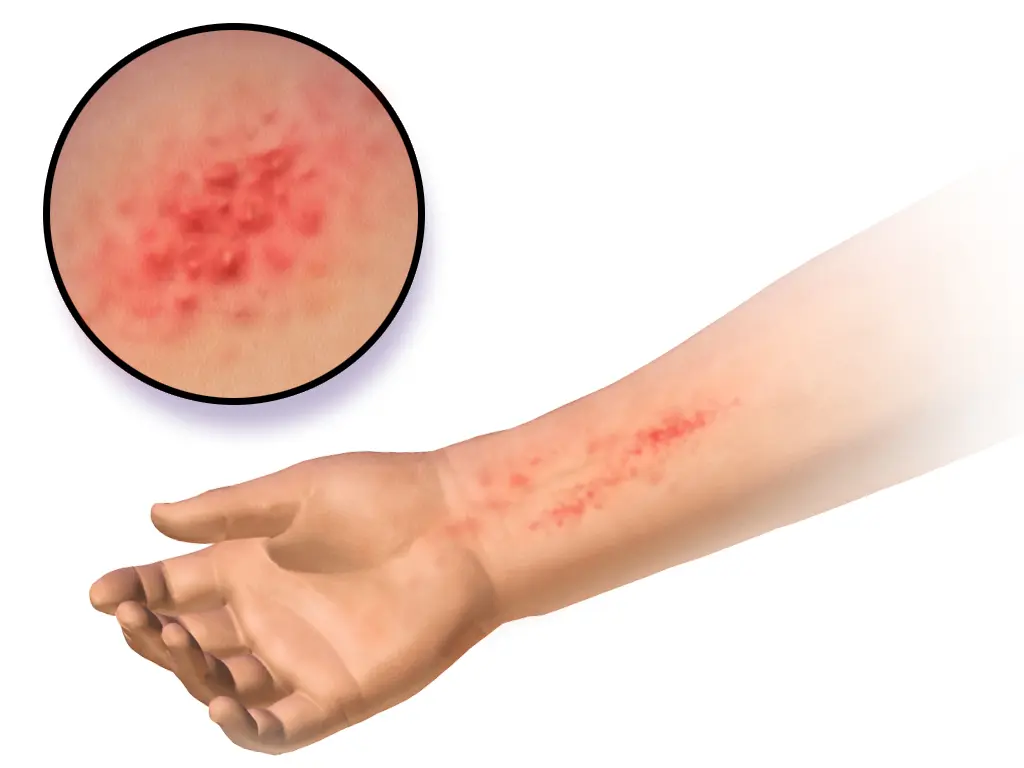
| Looks like | Itchy red rash, often scaly, sometimes weeping, spreading a little beyond the jewelry | Pink at the hole, maybe a small bump | Spreading redness, heat, thick coloured discharge |
| Timing | Hours to days after the jewelry goes in; persists while it stays | After knocks, sleeping on it, a long post | Days in, getting worse |
| Itch | The dominant symptom | Mild | Not the main feature; pain is |
| Settles when | The metal is removed | The cause is removed | Antibiotics |
The tell is that a nickel reaction follows the metal. Swap to titanium and it fades; put the old jewelry back and it returns. It also tends to show up wherever else that metal touches you: watch backs, belt buckles, jean rivets.
If the site is hot, spreading and producing thick discharge, that is infection and needs a doctor today. The infected ear piercing guide covers it.
Why “surgical steel” is the problem, not the solution
The steel sold as surgical for jewelry is usually 316L, and it contains roughly 10 to 14 percent nickel by weight. The nickel is bound into the alloy and releases slowly, which is why most people wear it without trouble. For someone already sensitised, slow release is still release.
The European Union limits how much nickel jewelry inserted into piercings may release, and some steel meets that limit. The United States has no equivalent rule, and “surgical steel” is a marketing phrase with no standard behind it. You cannot tell from the label whether a given steel post is low-release or not.
“Hypoallergenic” is worse. In the US it has no legal definition at all. It can be printed on nickel-plated brass.
The only useful information on a label is a standard: ASTM F136 for implant-grade titanium, a karat mark for gold, or a specific alloy designation. The materials guide explains what each means.
The metals that are actually safe
Implant-grade titanium, ASTM F136 (or commercially pure F67). Essentially nickel-free, and the default initial jewelry in any professional studio for exactly this reason. It anodises to colours without plating, so a titanium piece can be gold-toned, rose or blue with nothing added to the surface.
Niobium. Nickel-free, inert, anodises like titanium. Less common than titanium but equivalent for an allergy.
Solid gold, 14 karat or higher, in yellow or rose. Nickel-free at that purity from a reputable maker. The exception is white gold, which is often whitened with nickel; if you want white gold, it needs to be palladium-alloyed and the maker needs to say so. Below 14k, the alloy is mostly other metals and may include nickel.
Platinum. Nickel-free and inert; expensive.
Glass, for healed piercings and retainers.
Avoid, for anyone with a known allergy: plated jewelry of any kind (the plating wears through), ordinary white gold, brass and copper alloys, “surgical steel” of unknown provenance, and sterling silver in anything still healing.
Children and first piercings
Most nickel allergies begin with a first ear piercing done with a cheap stud, often from a gun, worn for weeks in a healing lobe. That exposure is the sensitising event, and it is permanent.
If you are having a child’s ears pierced, a protective choice is implant-grade titanium jewelry from the start, put in with a needle by a professional. The piercing gun guide covers the rest of why.
If you are already reacting
- Change the jewelry to titanium or solid gold. This is the treatment. Nothing applied to the rash works while the metal is still there.
- Do not remove the jewelry and leave the piercing empty if it is still healing; swap it, at a studio if you are unsure how.
- Clean with sterile saline and nothing else. Do not put antihistamine cream, tea tree oil or anything scented on the rash.
- See a doctor if the rash is severe, weeping, or spreading well beyond the piercing. A short course of a topical steroid is the usual answer, and it is a prescription decision.
- Ask a dermatologist for a patch test if you want confirmation, particularly if the reaction has appeared on skin that touches other metal too.
Expect the rash to settle within one to four weeks of the nickel being gone.
Living with it
Once you know, it is easy. Buy jewelry by its standard rather than its description, keep a titanium or gold piece in every piercing, and treat “hypoallergenic” as the warning it is. Everything else on this site about materials, including flat back earrings and threading, assumes implant-grade titanium as the starting point, which is also the nickel-safe starting point.
Frequently asked questions
What does a nickel allergy from a piercing look like?
An itchy, red, often scaly or weeping rash centred on the piercing and spreading a little around it, appearing hours to a couple of days after the jewelry goes in and persisting as long as it stays. It can look like eczema. Unlike infection it is not hot or full of thick discharge, and unlike irritation it does not settle when you stop knocking the piercing.
Is surgical steel nickel-free?
No. The steel most often sold as surgical, 316L, contains roughly 10 to 14 percent nickel by weight. It is bound into the alloy and releases slowly, which is fine for many people and not for someone who is sensitised. Implant-grade steel exists, but for a nickel allergy titanium removes the question.
What metals are safe for a nickel allergy?
Implant-grade titanium (ASTM F136 or F67), niobium, solid gold of 14 karat or higher in yellow or rose, platinum, and glass. Avoid plated jewelry of any kind, ordinary white gold, sterling silver in a healing piercing, brass, and anything described only as hypoallergenic.
Does hypoallergenic mean nickel-free?
No. In the United States the word has no legal definition, so it can be put on almost anything. Look for the alloy standard instead: ASTM F136 for titanium, or a stated karat for gold.
Can you develop a nickel allergy from a piercing?
Yes, and piercing is the most common way people become sensitised in the first place. Prolonged skin contact with nickel-releasing jewelry, especially in a healing wound, is exactly the exposure that starts it. Once sensitised, you stay sensitised.
How do I treat a nickel allergy on a piercing?
Remove the nickel: switch the jewelry to implant-grade titanium or solid gold. A doctor can prescribe a topical steroid for the rash if it is severe, and a dermatologist can confirm the allergy with a patch test. The rash usually settles within a few weeks of the metal being gone.
Sources
- NHS - Contact dermatitishttps://www.nhs.uk/conditions/contact-dermatitis/
- Association of Professional Piercers - Jewelry for initial piercingshttps://safepiercing.org/jewelry-for-initial-piercings/
- American Academy of Dermatology - Caring for pierced earshttps://www.aad.org/public/everyday-care/skin-care-basics/tattoos/caring-for-pierced-ears