On this page
Start a nipple piercing with a barbell, not a ring. A titanium barbell, usually 14 gauge and sized to your anatomy by your piercer, is easier to keep still, and keeping it still is what a healing nipple piercing needs most.
The rest of this page covers how the length is chosen, when rings and decoration become possible, and how the jewelry has to fit into daily life: bras, exercise and sleep.
Barbell first
A barbell has a straight or curved bar with an end on each side. Two decisions come with it.
Straight or curved. Most piercers start with a straight barbell. A curved bar is sometimes chosen to suit a particular nipple shape. That call belongs to your piercer, who has examined you, and it matters less than getting the length right.
Gauge. 14 gauge is the most common. Some piercers use 16 or 12 depending on the nipple. Stick to the gauge your piercer chose. A thinner post can shrink the channel, and a thicker one can damage it.
Length
Nipple size and shape vary widely, and the right length is individual: usually around 12 to 16 mm at the start, chosen to clear the swelling without being unnecessarily long afterwards.
- Too short: swelling makes the ends press into the skin, and the jewelry can embed.
- Too long: the bar catches on clothing and bedding, and the APP advises avoiding friction and pressure from clothing.
Downsize at eight to twelve weeks, once the swelling has gone. Have your piercer do it. Never guess the length at home. The nipple piercing guide covers anatomy, including inverted nipples, and nipple piercing healing time covers the stages.
Ends and threading
Choose small, flat or domed ends while healing. Large or decorative ends catch on bras, clothing and sports kit, and every catch pulls on the channel.
The jewelry should be internally threaded or threadless. With internal threading, the part that goes through your skin is smooth, and the threads sit on the removable end. Threadless vs threaded explains how the two work.
Rings
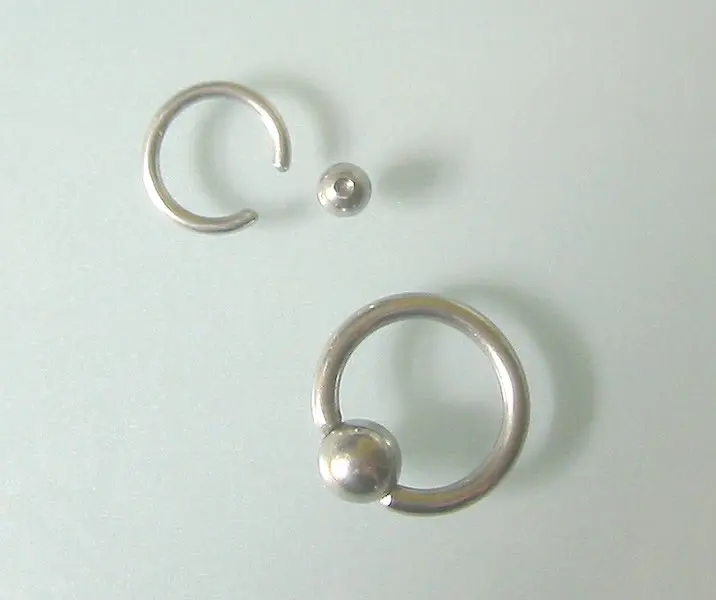
Captive bead rings are the classic look for a healed nipple piercing, and they suit some people well. They are not a starting choice:
- A ring needs a large diameter to sit on a straight piercing.
- It moves constantly, and it catches on clothing more than a barbell does.
- It is harder to keep still while healing.
Wait until the piercing has healed, and fit one once your piercer confirms it is ready. The ring styles guide explains how captive bead rings, seamless rings and circular barbells differ.
Chains, dangles and weight
Once healed, decorative and dangling jewelry are possible. Weight is cumulative. A heavy piece worn every day pulls on the channel and can stretch it over time. Keep it light, and save the heavier pieces for occasions.
Bras, exercise and sleep
A nipple piercing is touched by clothing all day, so the jewelry has to work with your routine.
- A soft, seamless bra without underwire while healing. Seams and underwire press on the piercing.
- Low-profile ends that will not catch on a sports bra or a fitted top.
- Exercise that involves running or high impact means repeated friction. Wear a supportive, seamless sports bra, and expect to adjust your routine.
- Sleep on your back or side, not on your front, while it heals.
If you need to remove metal, for a scan for example, or want to keep the channel open without jewelry, a flexible retainer is an option. See piercing retainers.
Material
The Association of Professional Piercers sets standards for jewelry in a new piercing:
- Implant-grade titanium, certified to ASTM F136. The usual choice.
- Niobium or platinum.
- Solid gold, 14k or higher, nickel- and cadmium-free.
- A polished, mirror finish.
Avoid plated and gold-filled jewelry, whose thin gold layer can wear off, and steel that does not state its standard. Novelty jewelry with decorative designs is often plated and made from unnamed metal, so check the alloy and the standard before you buy. The materials guide explains what to look for.
Breastfeeding and jewelry
A well-placed, fully healed nipple piercing does not usually stop people breastfeeding. Remove the jewelry for each feed. It is a choking and gagging risk for an infant. A flexible retainer is an option if you want to keep the channel open.
Talk to a lactation consultant or your doctor about your situation. The nipple piercing guide covers pregnancy and breastfeeding in more detail.
Signs the jewelry is wrong
- The skin puffs over the ends or the ends dig in. It is too short, or swelling has outgrown it. See your piercer the same day.
- The bar catches and moves constantly. It is too long.
- Redness, itching or weeping after a new piece goes in. It can be a reaction to the metal.
- The visible bar length between the ends getting shorter, or the skin over the bar thinning. That is migration. See piercing rejection.
- Heat, spreading redness, thick coloured discharge or a lump behind the piercing. That needs a doctor the same day. See infected nipple piercing.
Cost
$30 to $100 for a properly sized titanium barbell, in addition to the piercing at $40 to $80. Many studios price a pair together if you are having both done. The piercing prices page compares every placement.
Not medical advice
This page is educational. If a nipple piercing is hot, has spreading redness or thick coloured discharge, there is a lump in the breast, or you have a fever, see a doctor rather than reading further.
Frequently asked questions
What is the best jewelry for a nipple piercing?
A barbell in implant-grade titanium, usually 14 gauge, sized to your anatomy by your piercer. It is easier to keep still while healing than a ring, which matters more here than the final look.
Should a nipple piercing be curved or straight?
Most piercers start with a straight barbell, and a curved bar is sometimes chosen to suit a particular nipple shape. That decision belongs to your piercer, who has examined you. Whichever it is, the length matters more than the shape.
What gauge and length is nipple jewelry?
14 gauge is the most common, and some piercers use 16 or 12 depending on the nipple. Length depends on your anatomy: long enough to clear swelling, around 12 to 16 mm, then downsized at eight to twelve weeks. Too short and swelling makes it embed; too long and it catches on everything.
Can I wear a ring in a new nipple piercing?
Not while it is healing. Captive bead rings are the classic look for a healed piercing, but they move more than a barbell and are harder to keep still. Save the ring for when it has healed.
Can I wear a bra with a nipple piercing?
Yes, with some care. While it heals, wear a soft, seamless bra without underwire, or none if that is more comfortable. Underwire and seams press directly on the piercing.
Can I keep my nipple jewelry in while breastfeeding?
Remove it for each feed. It is a choking and gagging risk for an infant. A flexible retainer is an option if you want to keep the channel open, and a lactation consultant or your doctor can advise on your situation.
Sources
- Association of Professional Piercers - Jewelry for initial piercingshttps://safepiercing.org/jewelry-for-initial-piercings/
- Association of Professional Piercers - Suggested aftercare for body piercingshttps://safepiercing.org/aftercare/
- Association of Professional Piercers - Troubleshootinghttps://safepiercing.org/troubleshooting/
This article is for education only and is not medical advice. If a piercing is hot, swollen, spreading redness, oozing yellow or green discharge, or you have a fever, see a doctor today.