On this page
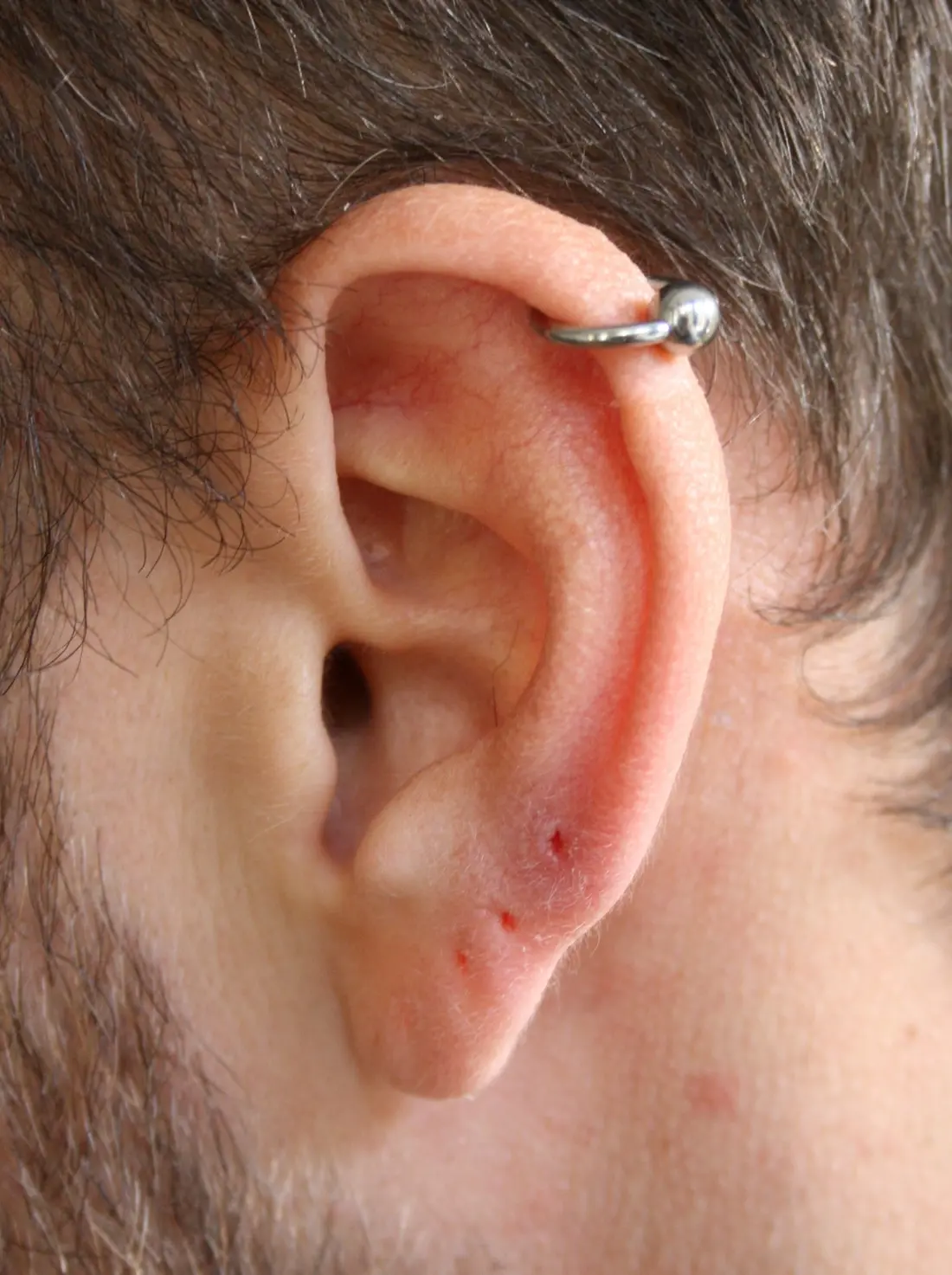
A helix piercing takes six to twelve months to heal. It is one of the most popular cartilage piercings, and the most common mistake with it is treating it as if it healed like a lobe.
By two or three months the outside looks finished. It is not. The channel inside is a thin, new tube of tissue, and it is easy to tear until well past month six.
Healing time by helix type
| Piercing | Healing time | Downsize at |
|---|---|---|
| Helix | 6-12 months | 6-10 weeks |
| Forward helix | 6-9 months | 6-10 weeks |
| Double helix | 6-12 months | 6-10 weeks |
| Hidden helix | 6-12 months | 6-10 weeks |
These are typical ranges for a well-placed piercing with the right jewelry. The top of a range is normal rather than slow. Ear piercing healing time compares every ear placement.
Why it takes so long
Cartilage has almost no blood supply of its own. It is fed by the thin layer around it, so repair creeps in from the edges. A lobe, which is soft tissue with a rich blood supply, heals in weeks. A helix takes months for the same reason. The cartilage guide explains what cartilage is and why it behaves this way.
Stage by stage
| Stage | When | What is normal |
|---|---|---|
| Inflammatory | Days 0-7 | Redness, swelling, warmth, clear or straw-coloured fluid |
| Proliferative | Weeks 2-12 | Swelling drops, crusting on the jewelry, itching. Looks finished |
| Maturation | Months 3-12 | The channel thickens and toughens. Still fragile if snagged |
Week 1. Swelling, warmth and tenderness. Sleeping on that side will hurt.
Weeks 2-4. Crusting collects on the jewelry, and itching begins. Both are normal. The piercing feels much better and starts to look healed, which is where trouble starts.
Weeks 6-10. The swelling has gone. Your starter post was deliberately long to leave room for it, and now that spare length lets the jewelry lever and catch. Go back to your piercer for a shorter post. Many studios include the first downsize.
Months 3-6. It looks completely healed and mostly feels fine. It is not. A single knock, an early swap or a night on the pillow can set it back.
Months 6-12. The channel matures. Crusting stops, tenderness goes, and the piercing reaches the point where a jewelry change is reasonable.
How to know it is healed
A helix is healed when all four of these are true:
- No tenderness when you press gently beside the jewelry.
- No discharge or crusting for at least two weeks.
- No redness or pink tinge around either opening.
- The jewelry moves freely, with no tugging.
The Cleveland Clinic gives the same signs: it does not hurt, it is not red or swollen, it is not crusty or flaking, and the jewelry rotates easily. If one fails, wait a month and check again. When can I change my cartilage piercing has an interactive checklist that compares your piercing with its expected healing time.
What slows a helix down
- Sleeping on it. The APP warns against sleeping directly on a healing cartilage piercing, and that applies for the whole healing period.
- Headphones and phones. In-ear buds and over-ear pads press on the upper ear all day.
- Hair, hats, scarves and masks. Mask loops behind the head are better than loops over the ears.
- Snagging on jumpers, towels and hairbrushes.
- Early hoops and jewelry changes.
- Touching and turning it.
- Over-cleaning, or using alcohol, hydrogen peroxide or ointments.
- Low-quality jewelry. Plated metal, nickel and external threads irritate a healing helix.
- Not downsizing.
Almost all of it is within your control. How to clean an ear piercing covers the routine: sterile saline twice a day, patted dry, and nothing else.
When healing is not going to plan
- A bump. Common on a helix, and almost always mechanical: pressure, a long post, or a knock. See cartilage piercing bumps.
- Infection. Heat, spreading redness, thick coloured discharge, increasing pain or a fever needs a doctor the same day. Leave the jewelry in unless a doctor says otherwise. Untreated cartilage infection can permanently deform the ear. See infected ear piercing.
- A lump that spreads beyond the piercing and keeps growing. Helix keloids do happen. See the keloid guide.
If the piercing has healed and you take the jewelry out, how long a piercing takes to close explains why it can shrink faster than you would expect.
Cost and jewelry
A helix costs $30 to $80 in a US studio, plus jewelry. The helix piercing guide has the full picture, including jewelry, sizes and pain.
A healing piercing should stay out of pools, hot tubs and the sea: see swimming with a new piercing. Most piercings also need a shorter post fitted while they heal, so read piercing downsizing too. For other cartilage placements, see cartilage piercing healing time, tragus, daith and industrial.
Not medical advice
This page is educational. If a piercing is hot, has spreading redness or coloured discharge, or you feel feverish or unwell, see a doctor rather than waiting it out.
Frequently asked questions
How long does a helix piercing take to heal?
Six to twelve months. The outside looks settled by two or three months, but the channel inside is still maturing and is easy to damage until at least month six. The Cleveland Clinic gives the same range, six to twelve months, for helix and other cartilage piercings.
Why does my helix look healed but still hurt?
Because the surface heals long before the channel does. Tenderness that comes back when you sleep on it, catch it or change the jewelry is the piercing telling you it is not finished. It is the most common reason helix piercings get bumps.
When can I put a hoop in my helix?
Only when it is fully healed, at six months at the earliest and often nearer twelve. A hoop moves constantly and drags through a channel that is still forming, so it is a common cause of bumps. Wait until it passes all four tests.
How long does a forward helix or double helix take to heal?
A forward helix takes six to nine months. A double helix, which is two piercings, takes six to twelve, and they heal side by side, so the slower one sets the pace.
Can I sleep on a helix piercing?
Not while it is healing, which means for six to twelve months, not just the first few weeks. The APP says sleeping directly on a healing cartilage piercing can cause irritation and even shift its angle, and suggests a travel pillow on top of your pillow with your ear in the opening.
Is a bump normal on a healing helix?
Common, but not something to ignore. It is almost always pressure or an over-long post rather than infection or a keloid. Find what is pressing on it, remove that, and keep cleaning with saline. See a doctor if it is hot, spreading or draining thick coloured fluid.
Sources
- Cleveland Clinic - Ear piercing 101: healing, hurting, cleaning and morehttps://health.clevelandclinic.org/what-to-expect-when-getting-your-ears-pierced
- Association of Professional Piercers - Suggested aftercare for body piercingshttps://safepiercing.org/aftercare/
- American Academy of Dermatology - Caring for pierced earshttps://www.aad.org/public/everyday-care/skin-care-basics/tattoos/caring-for-pierced-ears
- Association of Professional Piercers - Troubleshootinghttps://safepiercing.org/troubleshooting/
This article is for education only and is not medical advice. If a piercing is hot, swollen, spreading redness, oozing yellow or green discharge, or you have a fever, see a doctor today.