On this page
Ears are the most pierced part of the body and the place where the worst aftercare advice still circulates. Twisting the earring daily, dabbing it with alcohol, taking it out to clean it: all of it is wrong, and all of it is still printed on cards handed out at mall counters.
The real routine takes a minute.
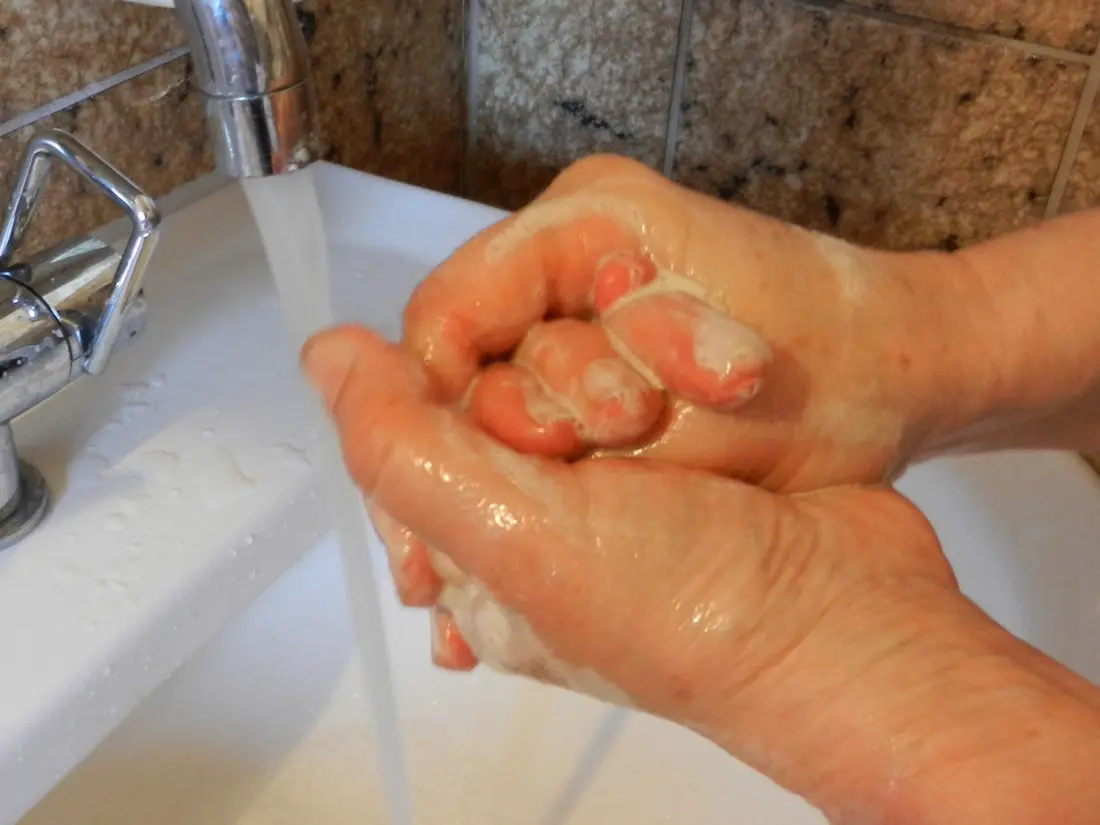
Photo by Beat Ruest via Wikimedia Commons, CC BY-SA 4.0.
The other harmless-but-alarming symptom is smell, covered in why does my piercing smell.
The routine
- Wash your hands.
- Spray sterile saline on the front and the back of the piercing. Let it sit 30 seconds to soften any crust.
- Pat dry with clean paper towel, never a cloth towel.
- Twice a day.
No twisting. No removing. No scrubbing. No cotton buds.
Lobes and cartilage are different
They need the same routine but very different expectations.
| Earlobe | Cartilage (helix, conch, tragus, rook, daith, industrial) | |
|---|---|---|
| Tissue | Soft, well supplied with blood | Dense, poor blood supply |
| Healing | 6-10 weeks | 6-12 months |
| Downsize | 4-6 weeks | 6-10 weeks |
| Main risk | Reaction to cheap jewelry | Pressure bumps |
| Infection risk | Low | Higher and more serious |
The gap matters. A lobe genuinely is healed at two months. A helix at two months looks identical to a healed one and is nowhere near finished.
Butterfly backs are a problem
The standard earring back, the small butterfly clutch, is poorly suited to a healing piercing. It has crevices that trap discharge against the skin, it slides up and down the post, and it presses the earring into the lobe when you sleep.
A flat-back labret is the better option: a smooth disc that sits flush against the back of the ear, with nothing to trap and nothing to press. If your piercing came with butterfly backs, ask your piercer about switching once initial swelling has passed.
That smell people notice behind an old lobe piercing is dried lymph and skin cells collecting in a butterfly clutch. It is not an infection, and a flat back solves it.
Sleep, headphones, hair
These three cause more ear-piercing problems than bacteria ever will.
Sleeping on it. The APP says sleeping directly on a healing cartilage piercing can cause irritation and even shift the piercing’s angle. Sleep on the other side. If you have piercings on both sides, or you move at night, place a travel pillow on top of your pillow and put your ear in the opening, as the APP suggests. Piercing pillow explains how to set it up.
Headphones. Over-ear cups press on helix, conch and rook piercings. In-ear buds press against a tragus or an inner conch. For the first several months use open-back or bone-conduction headphones, or take calls on the other side.
Hair. Long hair wraps around jewelry and pulls it. Shampoo and conditioner build up behind the ear. Dry shampoo and hairspray drift straight into a fresh piercing. Tie hair back while healing, shield the ear when you spray, and rinse well.
Also worth watching: face-mask ear loops, hats, helmets, glasses arms, and phones held against the ear.
Downsizing
Your initial post is longer than you need, deliberately, so there is room for swelling. Once the swelling has gone, that extra length becomes a lever that catches on hair, clothes and pillows, and a catching post produces most of the bumps people blame on infection.
Go back to your piercer for a shorter post at four to six weeks for a lobe and six to ten weeks for cartilage. Many studios include the first downsize in the price.
Changing jewelry
Wait for the full healing time, then change into implant-grade titanium or solid gold. A lot of “my piercing got infected months later” is actually a nickel reaction to a costume earring put in too soon, or put in at all.
A note on gauge: most fashion earrings are 20 gauge, thinner than the 16 or 18 gauge a studio pierces at. Wear thin posts for months and the channel shrinks toward them, and thicker jewelry may no longer fit. If you want to wear 16 gauge jewelry, stay at 16 gauge.
When something is wrong
A small pink lump beside cartilage jewelry is almost always an irritation bump, not an infection and not a keloid. Find what is pressing on it, fix that, and give it four to eight weeks. Start with piercing bump vs keloid.
See a doctor the same day for heat, spreading redness, thick yellow or green discharge, swelling that grows after the first week, severe pain, or fever. Cartilage infections escalate faster than lobe infections because the tissue has such a poor blood supply. Leave the jewelry in unless a clinician says otherwise; see infected ear piercing.
Frequently asked questions
What should I clean a new ear piercing with?
Sterile saline wound wash, 0.9% sodium chloride, sprayed on the front and back of the piercing twice a day. Nothing else is needed, and most of the products sold as piercing cleaners are unnecessary.
Should I twist my earrings while they heal?
No. Twisting is outdated advice that tears the new tissue forming inside the channel and drags dried crust through the wound. Leave the jewelry completely still.
How long does an ear piercing take to heal?
An earlobe takes six to ten weeks. Any cartilage piercing, including helix, conch, tragus, rook and daith, takes six to twelve months even though it feels finished much sooner.
Can I wear headphones with a new ear piercing?
Over-ear cups press directly on cartilage piercings and in-ear buds press on a tragus or conch. Both keep the piercing permanently irritated. Use open or bone-conduction headphones for the first months.
Why does my ear piercing smell?
Dried lymph and skin cells collecting behind the jewelry, particularly behind a butterfly back. It is normal, it is not infection, and rinsing plus switching to a flat back solves it.
Can I use the solution that came with my piercing kit?
Check the ingredients. If it is anything other than plain sterile saline, particularly if it contains alcohol or benzalkonium chloride, plain saline is a better choice.
Sources
- Association of Professional Piercers - Suggested aftercare for body piercingshttps://safepiercing.org/aftercare/
- American Academy of Dermatology - Caring for pierced earshttps://www.aad.org/public/everyday-care/skin-care-basics/tattoos/caring-for-pierced-ears
- Mayo Clinic - How to treat a piercing infectionhttps://www.mayoclinic.org/healthy-lifestyle/adult-health/expert-answers/ear-piercing-infection/faq-20452841
This article is for education only and is not medical advice. If a piercing is hot, swollen, spreading redness, oozing yellow or green discharge, or you have a fever, see a doctor today.