On this page
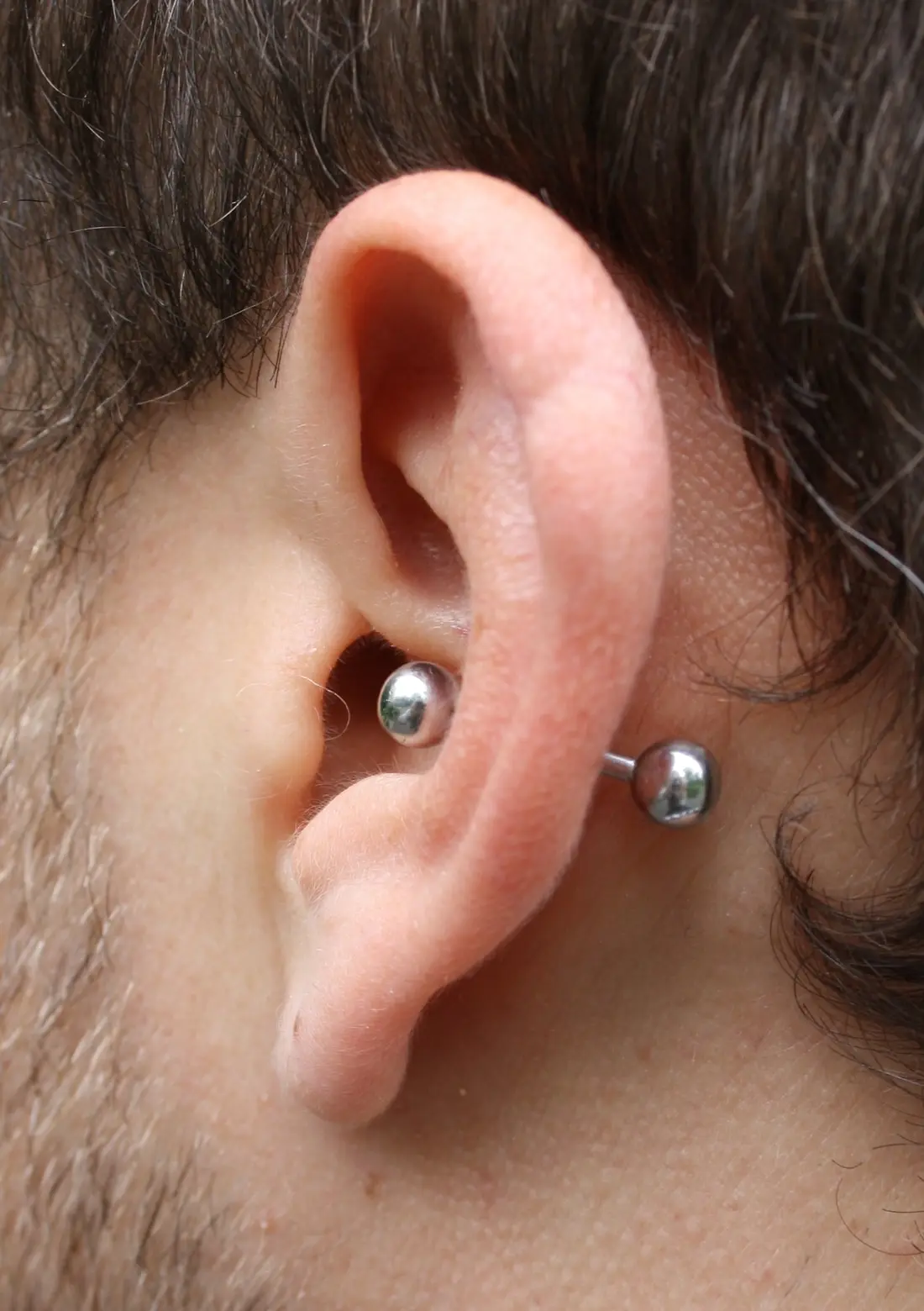
A conch piercing takes six to twelve months to heal. The outside can look settled long before then, and the mistake to avoid is treating a conch that looks fine at two months as finished.
What the sources give
| Source | Conch or ear cartilage |
|---|---|
| Cleveland Clinic | Between six and 12 months for daith, rook, conch, helix and tragus |
| This site | Conch: 24 to 52 weeks |
| Claire’s | Cartilage 8 to 12 weeks |
| Banter (Piercing Pagoda) | Cartilage 8 to 12 weeks |
| Rowan | New piercings can take up to one year to fully heal |
We do not know how Claire’s and Banter define healed, so their figures cannot be compared directly. The Cleveland Clinic and our guide give the time for the piercing to heal fully, and the Association of Professional Piercers (APP) warns that a piercing may seem healed before the healing process is actually complete.
The American Academy of Dermatology’s advice, for pierced ears, is not to remove a new piercing for six weeks or more, even at night, because taking the starter jewelry out too early may cause the piercing to close. That is a minimum, not a healing time.
Why cartilage takes longer
A 2005 review in American Family Physician says ear cartilage piercings are associated with poor healing and more serious infection because cartilage is avascular, meaning it has no blood supply of its own. A lobe is soft tissue and heals in weeks. Our guides give six to ten. Ear piercing healing time compares every ear placement.
| Piercing | Healing |
|---|---|
| Earlobe | 6 to 10 weeks |
| Tragus | 24 to 40 weeks |
| Daith | 24 to 40 weeks |
| Conch | 24 to 52 weeks |
| Helix | 24 to 52 weeks |
| Rook | 24 to 52 weeks |
These are typical ranges. The top of a range is normal rather than slow.
The downsize
A conch starts with a longer post than you will need, to leave room for swelling. Our guide gives six to ten weeks for the downsize. The APP says many piercings require a downsize before the piercing is healed, and that you should see a qualified piercer to perform downsizes or any jewelry changes during healing. Piercing downsizing explains why.
What slows healing
The APP’s aftercare advice is to avoid friction and pressure from clothing, excessive motion of the area, playing with the jewelry and vigorous cleaning. For an ear it adds two:
- Sleeping on it. The APP says sleeping directly on a healing cartilage piercing can cause irritation and even shift its angle, and suggests a travel pillow on top of your pillow with the ear in the opening.
- Cloth towels. The APP says they can harbor bacteria and snag on jewelry, so dry with clean disposable gauze.
Do not change the jewelry early. The APP says to leave the initial jewelry in place for the entire healing process unless there is a problem with its size, style or material. When can I change my cartilage piercing explains how to check.
Swimming
Keep it out of pools, hot tubs, lakes and the sea until it has healed. See swimming with a new piercing.
When to see a doctor
The APP says to see a doctor if you have severe redness, swelling or pain, or if symptoms last for a week or get worse. The American Family Physician review says infections can develop in the first month, and that cartilage infections are more serious. Leave the jewelry in unless a doctor says otherwise. Irritated or infected piercing has a symptom table, and cartilage piercing bumps covers lumps.
What it costs
A conch is $30 to $35 for the service in the studio price lists we read, or $60 to $70 with starter jewelry included. See how much is a cartilage piercing.
Not medical advice
This page is educational. If a piercing is hot, has spreading redness, thick coloured discharge or red streaks, or you feel unwell, see a doctor the same day.
Frequently asked questions
How long does a conch piercing take to heal?
Six to twelve months. The Cleveland Clinic gives that range for conch, helix, tragus, daith and rook piercings, and our guide gives 24 to 52 weeks. The Association of Professional Piercers (APP) warns that a piercing may seem healed before the healing process is actually complete, so a conch that looks settled at two or three months is not finished.
Why do some places say eight to twelve weeks?
Claire's and Banter both give 8 to 12 weeks for cartilage, and Rowan says up to a year. We do not know how the shorter figures are defined. The Cleveland Clinic and our guide give six to twelve months for full healing, and the APP warns that a piercing may seem healed before it is.
When should I downsize a conch piercing?
Our guide gives six to ten weeks, once the initial swelling has gone. The APP says many piercings require a downsize before the piercing is healed, and that you should see a qualified piercer to do it.
When can I change my conch jewelry?
Not until it has healed. The APP says to leave the initial jewelry in place for the entire healing process unless there is a problem with its size, style or material, apart from a downsize by a piercer. The guide on changing a cartilage piercing explains how to check.
Can I sleep on a conch piercing?
Not while it is healing. The APP says sleeping directly on a healing cartilage piercing can cause irritation and even shift the piercing's angle, and suggests a travel pillow on top of your pillow with your ear in the opening.
What if it looks infected?
The APP says to see a doctor if you have severe redness, swelling or pain, or if symptoms last a week or get worse. A 2005 American Family Physician review says ear cartilage piercings are associated with more serious infection, and that infections can develop in the first month. Leave the jewelry in unless a doctor says otherwise.
Sources
- Cleveland Clinic - Ear piercing 101: healing, hurting, cleaning and morehttps://health.clevelandclinic.org/what-to-expect-when-getting-your-ears-pierced
- Meltzer (2005) - Complications of body piercing. American Family Physicianhttps://www.aafp.org/pubs/afp/issues/2005/1115/p2029.html
- Association of Professional Piercers - Suggested aftercare for body piercingshttps://safepiercing.org/aftercare/
- Association of Professional Piercers - Troubleshootinghttps://safepiercing.org/troubleshooting/
- American Academy of Dermatology - How to care for a new piercinghttps://www.aad.org/news/how-to-care-for-a-new-piercing
- Claire's - Piercing guidehttps://www.claires.com/pages/piercing-guide
- Banter by Piercing Pagoda - Ear piercinghttps://www.banter.com/ear-piercing
- Rowan - Aftercarehttps://heyrowan.com/pages/care-after
This article is for education only and is not medical advice. If a piercing is hot, swollen, spreading redness, oozing yellow or green discharge, or you have a fever, see a doctor today.