On this page
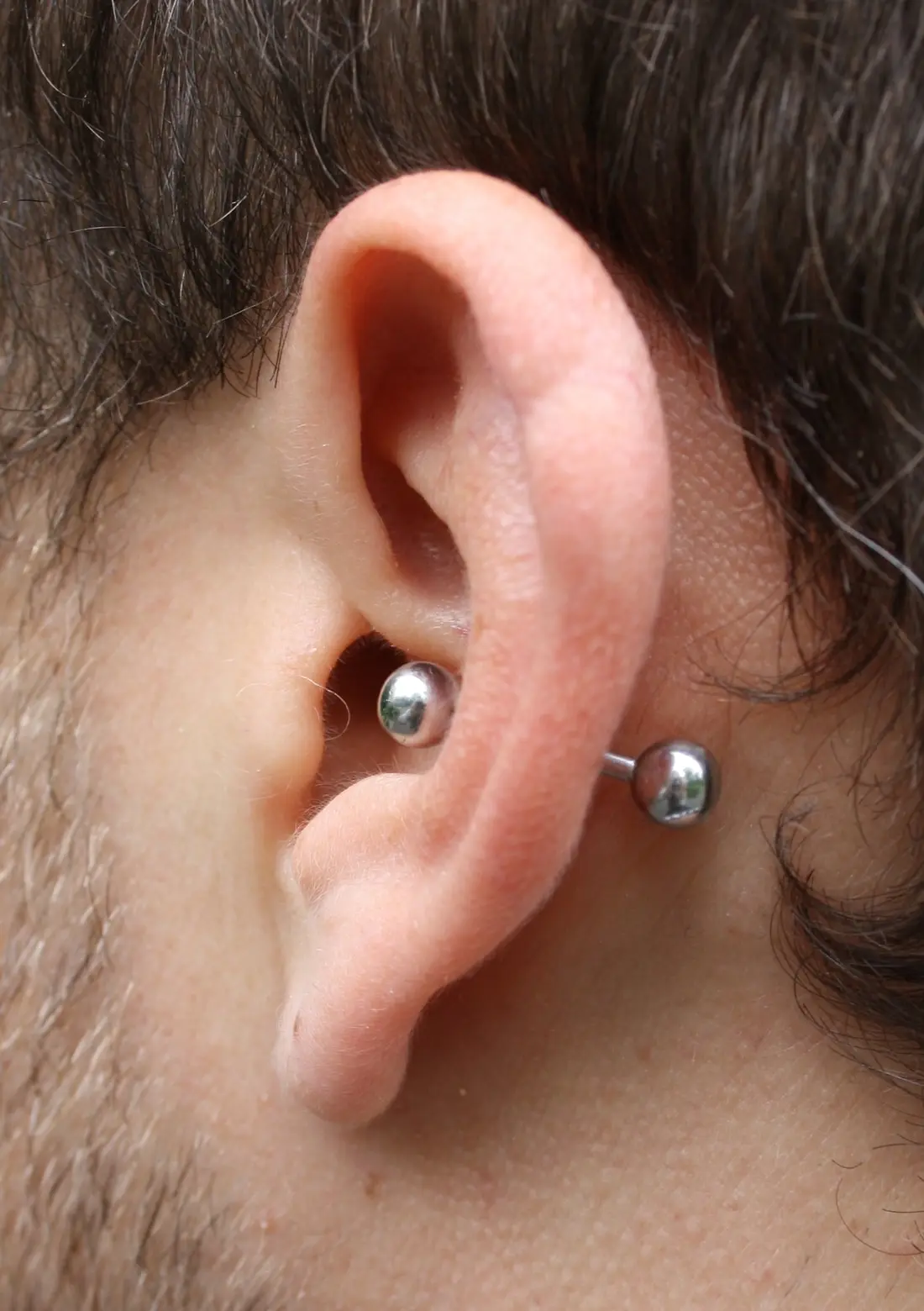
A conch piercing hurts more than an earlobe piercing. WebMD says you will feel a pinch and probably some throbbing during the piercing, and that the pain will not last long.
What the sources say
| Source | Conch |
|---|---|
| WebMD | Hurts more than an earlobe piercing, which is cushioned by fatty tissue. A pinch and probably some throbbing. The pain will not last long |
| Cleveland Clinic | Cartilage piercings tend to be more painful than earlobes, which hurt the least. Typically a quick pinch, followed by some throbbing |
| Healthline (ranking) | Daith, rook and conch are the more painful ear variants, because of thicker cartilage |
| This site | 5 out of 10 |
How it compares
Our scale runs from 1 to 10, where 1 is a firm pinch you would barely register and 10 is the most painful thing you have experienced. It is applied to every placement, but it is an average and not a promise. See the pain chart.
| Piercing | Pain |
|---|---|
| Earlobe | 2/10 |
| Helix | 4/10 |
| Tragus | 4/10 |
| Conch | 5/10 |
| Daith | 5/10 |
| Rook | 6/10 |
| Industrial | 7/10 |
The pages we read give no scores for individual placements, so the differences between cartilage piercings are our editorial estimates. Does ear piercing hurt covers every ear placement.
After the pinch
The Cleveland Clinic describes some throbbing afterwards, and tenderness can last through healing. The Cleveland Clinic gives six to twelve months for a conch to heal, WebMD says four months to a year, and our guide gives 24 to 52 weeks. Conch piercing healing time compares the sources.
Sleeping on it
The Association of Professional Piercers (APP) says sleeping directly on a healing cartilage piercing can cause irritation and even shift the piercing’s angle. It suggests a travel pillow on top of your pillow with the ear in the opening. Piercing pillow explains how.
Signs of infection
WebMD lists discharge from the pierced area, fever, warm, red or swollen skin around the piercing, and soreness or pain around it. The APP says to see a doctor if you have severe redness, swelling or pain, or if symptoms last for a week or get worse. Leave the jewelry in unless a doctor says otherwise. Irritated or infected piercing has a symptom table.
Related
Cartilage piercing healing time compares every placement, and how much a cartilage piercing costs covers the price.
Not medical advice
This page is educational. If a piercing is hot, has spreading redness, thick coloured discharge or red streaks, or you feel unwell, see a doctor the same day.
Frequently asked questions
Does a conch piercing hurt?
More than a lobe, WebMD says, because it goes through ear cartilage rather than fatty tissue. It says you will feel a pinch and probably some throbbing, and that the pain will not last long. On our scale a conch is 5 out of 10.
Does a conch hurt more than a helix?
On our scale, yes: 5 out of 10 against 4. Healthline's article on the most to least painful piercings lists daith, rook and conch as the more painful ear variants because of thicker cartilage, and treats standard ear piercings as among the less painful. The pages we read give no direct comparison of a conch and a helix.
How long does the pain last?
WebMD says the pain will not last long, and the Cleveland Clinic describes some throbbing after an ear piercing. Soreness can last through healing. The APP says to see a doctor if you have severe redness, swelling or pain, or if symptoms last for a week or get worse.
How long does a conch take to heal?
The Cleveland Clinic gives six to twelve months for conch, helix, tragus, daith and rook, and WebMD says four months to a year. Our guide gives 24 to 52 weeks. The APP warns that a piercing may seem healed before the healing process is actually complete.
Can I sleep on a conch piercing?
Not while it is healing. The APP says sleeping directly on a healing cartilage piercing can cause irritation and even shift the piercing's angle, and suggests a travel pillow on top of your pillow with the ear in the opening.
What are the signs of infection?
WebMD lists discharge from the pierced area, fever, warm, red or swollen skin around the piercing, and soreness or pain around it. Leave the jewelry in unless a doctor says otherwise, and see a doctor if symptoms last for a week or get worse.
Sources
- WebMD - Conch piercing: expectations, cleaning, and riskshttps://www.webmd.com/beauty/what-to-know-about-conch-piercing
- Healthline - Most painful piercings to least painfulhttps://www.healthline.com/health/most-painful-piercings
- Cleveland Clinic - Ear piercing 101: healing, hurting, cleaning and morehttps://health.clevelandclinic.org/what-to-expect-when-getting-your-ears-pierced
- Association of Professional Piercers - Suggested aftercare for body piercingshttps://safepiercing.org/aftercare/
- Association of Professional Piercers - Troubleshootinghttps://safepiercing.org/troubleshooting/
This article is for education only and is not medical advice. If a piercing is hot, swollen, spreading redness, oozing yellow or green discharge, or you have a fever, see a doctor today.