On this page
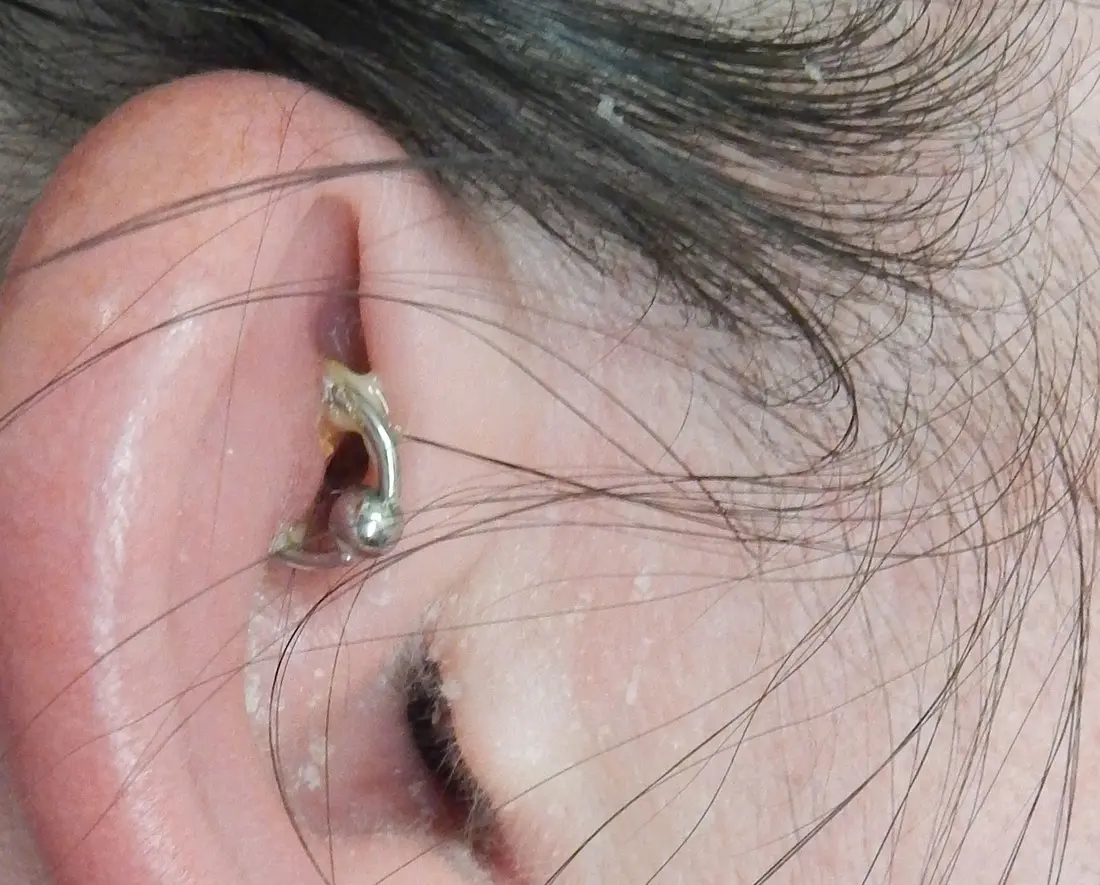
Most piercings that look angry are irritated, not infected. Irritation is common, and it is fixable at home. Infection is less common, and it needs a doctor.
The difference is direction. Irritation stays where it is and settles once you remove the cause. Infection spreads and gets worse.
The symptom table
| Normal healing | Irritation | Infection | |
|---|---|---|---|
| Redness | Pink around the openings | Red, but confined to the piercing | Red or dark, and spreading outward, sometimes in streaks |
| Heat | Warm at most | Warm at most | Hot to the touch |
| Discharge | Clear or whitish fluid that dries into crust | Little, or a small pimple-like bump at the piercing | Thick pus: white, yellow, green or grey, often with a bad smell |
| Pain | Tender, easing over days | Tender, and worse when pressed or knocked | Throbbing, and getting worse rather than better |
| Swelling | Mild, in the first days | Mild, at the piercing | Growing, spreading, or a hard lump underneath |
| A bump | No | A small, pimple-like bump at the hole | A lump that is hot, painful or full of pus |
| You | Fine | Fine | Possibly feverish, shivery or unwell |
| What it needs | Saline twice a day and time | Remove the cause | A doctor, with the jewelry left in |
The NHS lists the signs of infection as skin around the piercing that is swollen, painful, hot and very red or dark, blood or pus coming from it (which can be white, green or yellow), and feeling hot, cold, shivery or generally unwell. The Association of Professional Piercers (APP) adds thick, bad-smelling discharge and red streaks running from the piercing.
What irritation looks like
The APP calls it a localised piercing pimple: a small, slightly raised bump that is red and inflamed but contained at the piercing. The APP does not list causes on its troubleshooting page, but its aftercare advice points to the usual things to rule out:
- Friction and pressure from clothing, and excessive motion of the area. The APP’s aftercare advice is to avoid all of these, and a post that is longer than it needs to be moves more. See piercing downsizing.
- Sleeping on it. The APP says sleeping directly on a healing cartilage piercing can cause irritation.
- Snagging. The APP warns that cloth towels snag on jewelry, and clothing and hair can too.
- Products on or near it. The APP advises avoiding alcohol, hydrogen peroxide, antibacterial soaps, iodine, harsh products and ointments.
- Playing with the jewelry and vigorous cleaning, both on the APP’s list to avoid.
Remove the cause, keep up sterile saline and leave it alone. For a localised bump the APP suggests warm saline soaks or hot compresses several times a day. Piercing bumps explains what to do in detail, and piercing aftercare products explains what to put on it, which is nothing but saline.
What infection looks like
An infection gets worse over days rather than better. The typical picture:
- Redness that spreads away from the piercing, or streaks running from it.
- Skin that is hot.
- Thick discharge in white, yellow, green or grey, often smelling bad.
- Pain that increases, particularly after the first week.
- A hard, growing lump under or beside it.
- A fever, chills or feeling unwell.
See a doctor the same day if
- Redness is spreading, or there are red streaks.
- The area is hot, swollen and getting worse.
- There is thick coloured discharge or a bad smell.
- There is a hard, painful lump under or beside the piercing.
- You have a fever, or feel hot, cold, shivery or generally unwell.
- It is an oral piercing and you suspect infection. The APP says to seek medical attention.
- It is a cartilage piercing and you suspect infection. See infected ear piercing for why these need particular care.
The APP says to see a doctor if you have severe redness, swelling or pain, or if symptoms last for a week or get worse. The Cleveland Clinic advises seeing a primary care physician, a dermatologist or an urgent care facility if symptoms persist or return.
Leave the jewelry in
It is the instinct to take it out, and it is usually the wrong move. The NHS says to leave your jewellery in unless a doctor tells you to take it out. The APP explains why: removing jewelry from an infected piercing may result in an abscess, so quality jewelry or a retainer should stay in place so the infection can drain.
Neither irritation nor infection
- Rejection. The jewelry creeps toward the surface, the skin over it thins, and the openings get closer together, usually without heat or pus. See piercing rejection.
- A keloid. A firm, shiny lump that keeps growing beyond the piercing over months. See keloids.
- An allergic reaction, often to nickel, which brings itching and a rash after new jewelry goes in. See nickel allergy and piercings.
Where to read next
If you think it is infected, how to treat an infected piercing covers what to do now. There are also guides for specific piercings: ear, nose, belly button and nipple.
Not medical advice
This page is educational. If you are unsure whether a piercing is infected, treat it as infected and see a doctor the same day rather than waiting to see.
Frequently asked questions
How can I tell if my piercing is infected or just irritated?
Direction. Irritation stays where it is and settles when you remove the cause. Infection spreads and gets worse: redness moving outward, heat, thick coloured discharge, increasing pain and sometimes a fever. The NHS lists swollen, painful, hot and very red or dark skin, and blood or pus, as signs of infection.
What does an irritated piercing look like?
The Association of Professional Piercers describes a small, slightly raised, pimple-like bump that is red and inflamed but contained at the piercing. Pinkness, a little swelling and clear or whitish crust are also part of normal healing.
Is crust a sign of infection?
No. A crust of dried lymph fluid on the jewelry is a normal part of healing. Thick yellow or green discharge with a bad smell, especially with heat and spreading redness, is not.
How long does irritation last?
It varies, and it usually settles once the cause is removed. The APP says to see a doctor if you have severe redness, swelling or pain, or if symptoms last for a week or get worse.
Should I take the jewelry out if I think it is infected?
No, unless a doctor tells you to. The NHS advises leaving jewellery in, and the APP says removing it can trap the infection and cause an abscess. The jewelry keeps the channel open so an infection can drain.
When do I need a doctor?
Same day for thick coloured discharge, spreading redness or red streaks, heat, pain that is getting worse, a hard lump, or a fever or feeling unwell. In the UK the NHS advises an urgent GP appointment or NHS 111 if you think your piercing might be infected.
Sources
- NHS - Infected piercingshttps://www.nhs.uk/conditions/infected-piercings/
- Association of Professional Piercers - Troubleshootinghttps://safepiercing.org/troubleshooting/
- Association of Professional Piercers - Suggested aftercare for body piercingshttps://safepiercing.org/aftercare/
- Cleveland Clinic - Ear piercing 101: healing, hurting, cleaning and morehttps://health.clevelandclinic.org/what-to-expect-when-getting-your-ears-pierced
This article is for education only and is not medical advice. If a piercing is hot, swollen, spreading redness, oozing yellow or green discharge, or you have a fever, see a doctor today.