On this page
Most sore nose piercings are not infected, but infection needs a doctor, not a home fix. This page sets out what WebMD, the NHS, the Association of Professional Piercers (APP) and Healthline say, and where they disagree. It is information, not medical advice. Details are as read in October 2026.
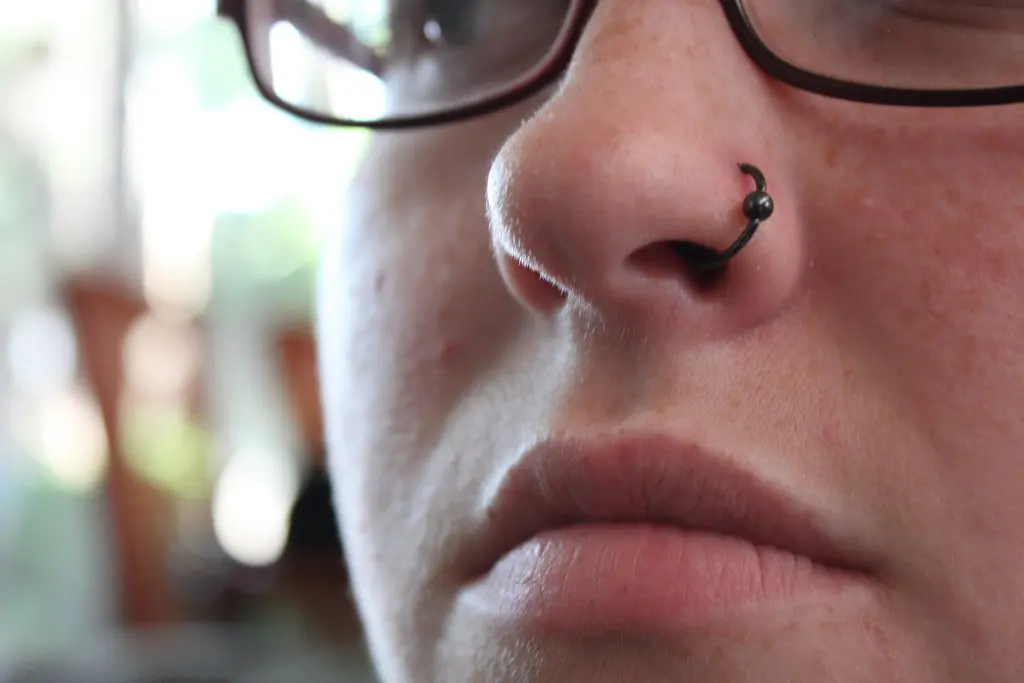
Photo by anna via Wikimedia Commons, CC BY 2.0.
Signs of infection
| Source | What it lists |
|---|---|
| WebMD, nose | Pain, redness, warmth, thick yellow pus; also swelling, bleeding, red stripes, tender skin, and yellow, green or dark discharge |
| NHS 111 Wales | Swollen, painful, hot, very red or dark skin; blood or pus, which can be white, green or yellow; feeling hot, cold or shivery or generally unwell |
| APP | A large amount of thick green, yellow or gray discharge that smells bad, and red streaks coming from the piercing |
| Healthline, septum | Severe or worsening pain, redness or swelling, itching, pressure, thick discharge that smells bad, fever or chills |
The APP says irritation or allergy are far more common than infection when a piercing is done and cared for properly. Our irritated vs infected guide has a symptom table for any placement.
Get help
- WebMD: call your doctor if you notice the signs above, and do not ignore a fever.
- NHS: ask for an urgent GP appointment or call 111 if you think the piercing might be infected.
- APP: go immediately for severe redness, swelling or pain, red streaks, symptoms that last a week or get worse, or fever, chills, nausea, vomiting, dizziness or disorientation.
The pages we read do not give separate advice for the nose. Our advice, not theirs: if swelling spreads across the face, or you have vision changes or a severe headache, treat it as urgent and get care the same day.
Leave the jewelry in
| Source | What it says |
|---|---|
| NHS | Leave your jewellery in, unless a doctor tells you to take it out |
| WebMD | Do not remove your nose jewelry until it is fully healed |
| APP | Removing jewelry in the presence of an infection may result in an abscess, and even well-healed piercings can shrink or close in minutes |
If a doctor wants it out, they will say so. A piercer can fit a retainer to keep the channel open.
Cleaning, soap and ointment
| Source | What it says |
|---|---|
| WebMD | Wash with soap and water at least twice a day, or clean gently with a saline-soaked gauze pad; saline spray inside the nose; a dab of over-the-counter antibiotic ointment; a cool compress and NSAIDs for pain; no alcohol or hydrogen peroxide |
| NHS | Clean twice a day with warm salty water to soften crusting; no antibacterial soaps, alcohol, hydrogen peroxide or iodine |
| APP | Saline soaks or hot compresses can encourage drainage in a localized infection; ointments are not preferred; a gel or cream such as mupirocin has been found effective |
The sources conflict on ointment and soap, so we do not pick a winner. Our own cautious approach: plain saline, nothing harsh, and no medicated product unless a doctor suggests it. WebMD adds that if home care does not help, you may need antibiotics. See the nose-specific cleaning routine and the aftercare rules.
Septum piercings
Healthline says some people with septum piercings notice a distinctive smell, even after healing, and that unless there are signs of infection it is most likely an accumulation of oils and dead skin cells around the jewelry. A bad smell together with thick green, yellow or gray discharge is on the infection lists above. Our infected septum guide goes through it.
Why it can get infected
Healthline says an opening in the skin can let bacteria in and lead to infection. The APP says to wash your hands thoroughly before cleaning or touching a piercing for any reason. Our aftercare guide covers the routine.
If it is a bump rather than an infection
A discrete lump beside the stud is not necessarily infection. Healthline’s septum article lists a lump or thickened tissue, or skin eruptions or bumps, among the signs to take to a healthcare provider, and says excess scar tissue can form. See nose piercing bump and piercing bump vs keloid.
For the steps that apply to any placement, read how to treat an infected piercing.
Frequently asked questions
How do I know if my nose piercing is infected?
WebMD lists pain, redness, warmth and thick yellow pus, plus swelling, bleeding, red stripes and yellow, green or dark discharge. The NHS lists skin that is swollen, painful, hot and very red or dark, blood or pus, and feeling hot, cold or shivery or generally unwell. A fever is a sign not to ignore.
Should I take out an infected nose piercing?
The sources say no. The NHS says to leave jewellery in unless a doctor tells you to take it out, WebMD says not to remove nose jewelry until it is fully healed, and the APP says removal during an infection may result in an abscess.
Can I put antibiotic ointment on my nose piercing?
The sources disagree. WebMD says to apply a dab of over-the-counter antibiotic ointment. The APP says ointments are not preferred because they limit oxygen circulation and delay healing, and that a gel or cream such as mupirocin has been found effective. Ask a clinician rather than guessing.
Is the smell from my septum piercing an infection?
Not necessarily. Healthline says that unless you have signs of an infection, a distinctive smell is most likely an accumulation of oils and dead skin cells around the jewelry. A foul smell with thick green, yellow or gray discharge is on the infection lists.
What does an infected nose piercing look like?
Per WebMD and the NHS, the skin around it is red, swollen, warm or hot and painful, with thick yellow, green or dark discharge or pus. Healthline's septum article adds itching and pressure. The APP also lists red streaks coming from the piercing.
When should I see a doctor?
WebMD says to call your doctor if you notice signs of infection and that home care may not be enough. The NHS says to ask for an urgent GP appointment or call 111. The APP says to go immediately for red streaks, severe redness, swelling or pain, symptoms that last a week or get worse, or fever, chills, dizziness or disorientation.
Sources
- WebMD - How do you keep a nose piercing safe and infection-free?https://www.webmd.com/beauty/nose-piercing-safety
- NHS 111 Wales - Infected piercingshttps://111.wales.nhs.uk/encyclopaedia/i/article/infectedpiercings
- Association of Professional Piercers - Troubleshootinghttps://safepiercing.org/troubleshooting/
- Healthline - Septum piercing: 13 FAQs about pain, cost and morehttps://www.healthline.com/health/body-modification/septum-piercing
- Association of Professional Piercers - Suggested aftercare for body piercingshttps://safepiercing.org/aftercare/
This article is for education only and is not medical advice. If a piercing is hot, swollen, spreading redness, oozing yellow or green discharge, or you have a fever, see a doctor today.