On this page
Some pain, swelling and extra saliva are expected after a tongue or lip piercing. The sources list what to watch for beyond that, and they agree on the main point: do not take the jewelry out.
This page follows the Association of Professional Piercers (APP), the NHS, WebMD and Healthline, and is information, not medical advice. Details are as read in October 2026.
Signs of infection
| Source | What it lists |
|---|---|
| APP | Large amounts of thick green, yellow or gray discharge that smells bad, and red streaks coming from the piercing |
| NHS 111 Wales | Swollen, painful, hot, very red or dark skin; blood or pus (white, green or yellow); feeling hot or shivery or generally unwell |
| WebMD | Redness, swelling, lots of bleeding, discharge, a bad smell |
| Healthline, tongue | Severe pain, severe swelling, redness or discoloration, discharge, unusual odors |
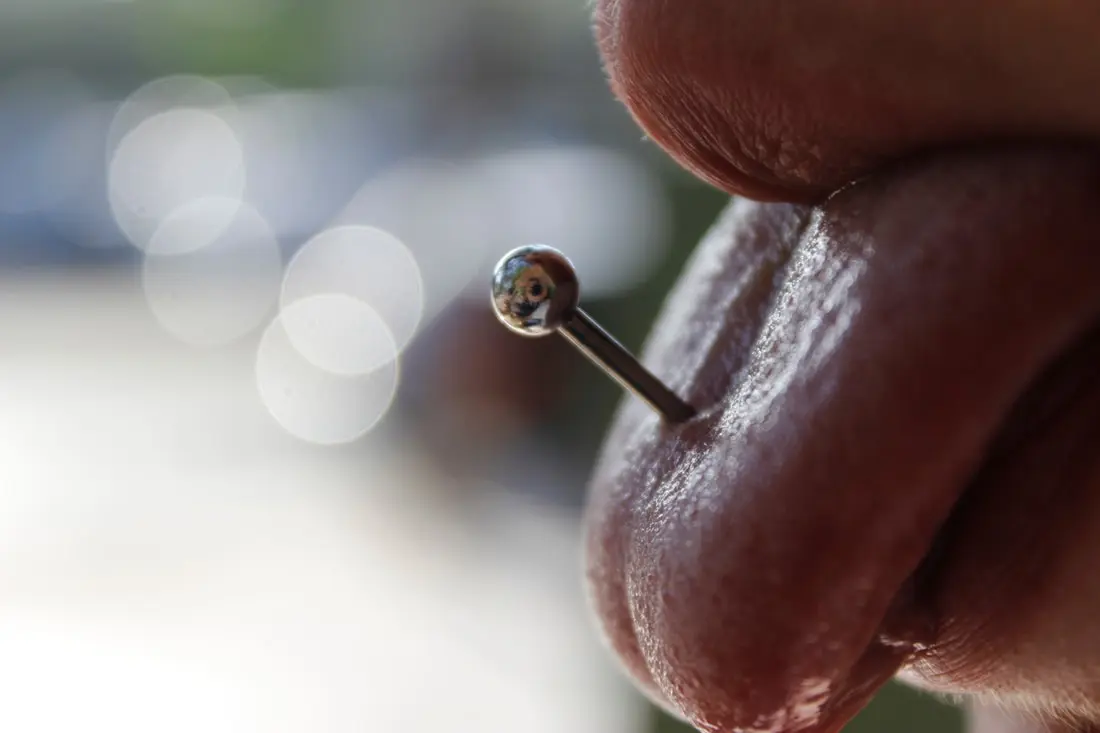
Photo by Jose Maria Bersabe via Wikimedia Commons, public domain.
The APP also says that irritation or allergy are far more common than infection when a piercing is done and cared for properly. Our irritated vs infected guide has a symptom table that applies to any placement.
What is normal at first
WebMD says to expect short-term pain, swelling and extra saliva. Healthline says swelling peaks in the first few days and that pain and swelling should start to subside by the end of the first week. The APP’s oral aftercare page puts swelling, light bleeding, bruising and tenderness at the first three to five days. Our tongue healing guide covers the timeline.
Do not take the jewelry out
| Source | What it says |
|---|---|
| NHS | Leave your jewellery in, unless a doctor tells you to take it out |
| Healthline, tongue | Removing it during an infection traps infectious bacteria inside your tongue |
| APP | Removing jewelry in the presence of an infection may result in an abscess, and simply taking it out may not resolve the problem |
The sources agree. If a doctor or dentist says it must come out, do that.
Rinsing
| Source | What it says |
|---|---|
| APP | Rinse with mild non-iodized sea salt and, or, an antimicrobial or antibacterial alcohol-free mouthwash, 4 to 5 times a day |
| NHS | Gargle with salty water or an alcohol-free mouthwash |
| WebMD | Rinse after every meal or snack and before bed, with warm salt water or an antibacterial, alcohol-free mouthwash |
The NHS also says not to use cotton wool to clean a piercing, and not to dry it with a towel. For soaks and compresses on other placements, the APP says isotonic saline soaks or hot compresses can encourage drainage in a localized infection.
Ointments, creams and what not to use
The APP says ointments are not preferred for topical treatment because they limit oxygen circulation and delay healing, and that Bactroban (mupirocin) cream or gel, not ointment, has been found effective. That is a medicine to ask a doctor about, not a product to buy for a mouth piercing. The NHS says not to use alcohol, hydrogen peroxide, antibacterial soaps, iodine or other harsh products, as they can damage cells.
When to get help
- The NHS says to ask for an urgent GP appointment or call 111 if you think your piercing might be infected.
- The APP says to go immediately for severe redness, swelling or pain, discharge problems, red streaks, symptoms that last a week or get worse, or fever, chills, nausea, vomiting, dizziness or disorientation. It also lists people who take steroids or have a chronic illness.
- WebMD says a swollen tongue can make it hard to breathe. Our advice, not WebMD’s: trouble breathing or swallowing is an emergency, not something to wait out.
Healthline says that if you think you have an infection, your piercer is not the right source of treatment and you should call your doctor.
Other mouth problems that look like infection
Sore gums or a damaged tooth are not always infection. The APP says it is vital to replace the longer starter jewelry with a shorter post once swelling subsides, and the ADA says playing with the jewelry is a main cause of dental damage. See tongue piercing jewelry, lip piercing jewelry and piercing downsizing. If a gum or tooth is the problem, see a dentist.
For the general steps that apply to any placement, read how to treat an infected piercing.
Frequently asked questions
How do I know if my tongue piercing is infected?
WebMD lists redness, swelling, lots of bleeding, discharge and a bad smell. Healthline says to seek medical advice for severe pain, severe swelling, redness or discoloration, discharge or unusual odors. The APP adds thick green, yellow or gray discharge that smells bad, and red streaks coming from the piercing.
Should I take out an infected tongue or lip piercing?
The sources say no. The NHS says to leave jewellery in unless a doctor tells you to take it out. Healthline says removing tongue jewelry will trap bacteria inside, and the APP says removal during an infection may result in an abscess.
Is a white coating on my tongue piercing an infection?
Our tongue healing guide treats a white coating in the first couple of weeks as a normal tissue response when there is no foul smell, fever or spreading redness. The Healthline tongue article we read does not address it, so ask your piercer if you are unsure.
What should I rinse an oral piercing with?
The APP suggests mild non-iodized sea salt and, or, an antimicrobial or antibacterial alcohol-free mouthwash, 4 to 5 times a day. The NHS says to gargle with salty water or an alcohol-free mouthwash. WebMD says to rinse after every meal or snack and before bed.
When should I see a doctor?
The NHS says to ask for an urgent GP appointment or call 111 if you think a piercing might be infected. The APP says to go immediately for severe redness, swelling or pain, red streaks, symptoms that last a week or get worse, or fever, chills, nausea, vomiting, dizziness or disorientation.
Can a swollen tongue be dangerous?
WebMD says a swollen tongue can make it hard to breathe. Some swelling is expected in the first days. Our advice, not WebMD's, is to treat trouble breathing or swallowing as an emergency.
Sources
- Association of Professional Piercers - Troubleshootinghttps://safepiercing.org/troubleshooting/
- Association of Professional Piercers - Suggested aftercare for oral piercingshttps://safepiercing.org/oral-aftercare/
- NHS 111 Wales - Infected piercingshttps://111.wales.nhs.uk/encyclopaedia/i/article/infectedpiercings
- WebMD - Mouth or tongue piercing: care, safety and problemshttps://www.webmd.com/oral-health/oral-piercing
- Healthline - Tongue piercing healing stages: day by day, aftercare, infectionhttps://www.healthline.com/health/tongue-piercing-healing-stages