On this page
An eyebrow piercing is a surface piercing, which Healthline says carries a higher risk of migration and rejection. That matters here, because a sore eyebrow piercing is not always an infection, and the two need different responses.
This page follows Healthline, the Association of Professional Piercers (APP) and the NHS, and is information, not medical advice. Details are as read in October 2026.
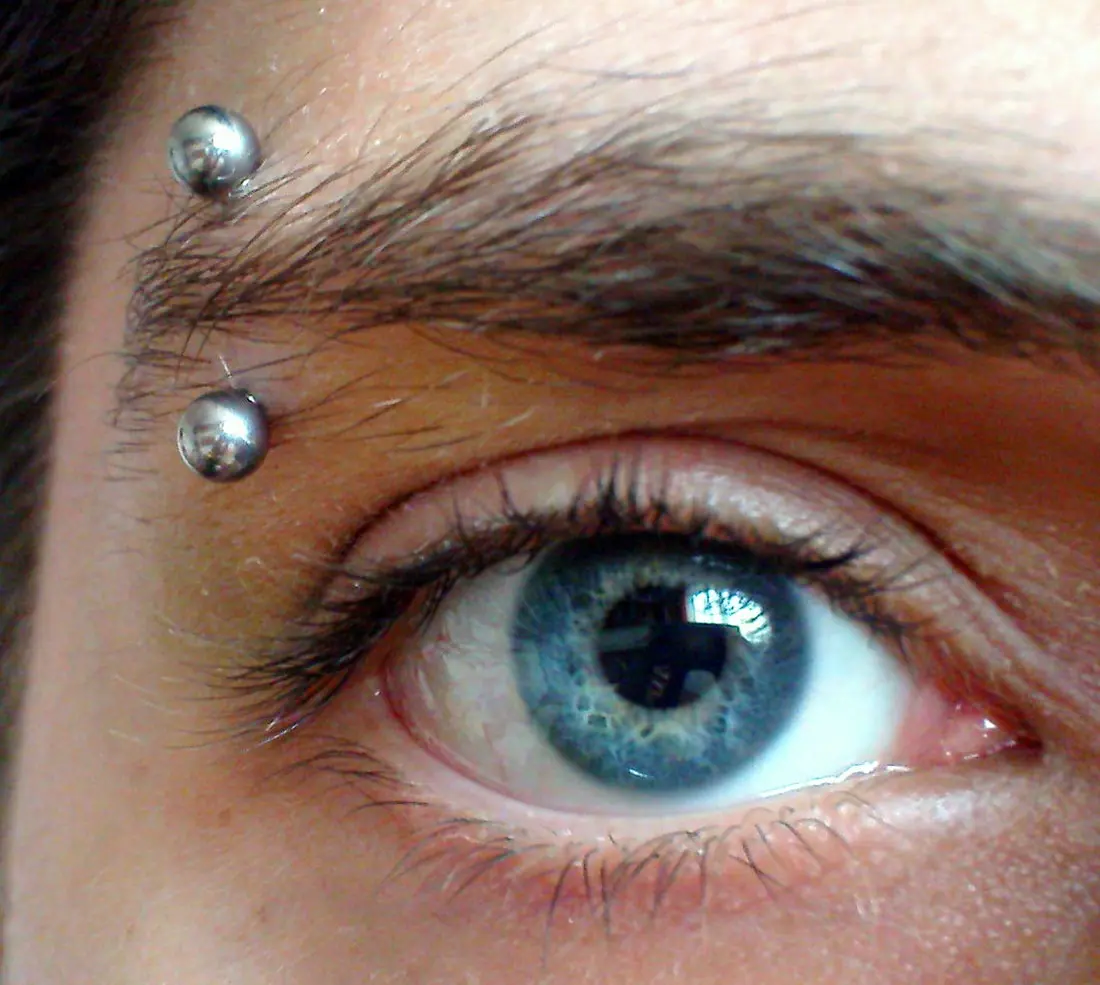
Photo by Lukas Stavek via Wikimedia Commons, CC0.
Signs of infection
| Source | What it lists |
|---|---|
| Healthline | Severe or worsening pain, redness or swelling; a foul smell, thick discharge or pus; a skin abscess; fever |
| NHS 111 Wales | Swollen, painful, hot, very red or dark skin; blood or pus that can be white, green or yellow; feeling hot, cold or shivery or generally unwell |
| APP | A large amount of thick green, yellow or gray discharge that smells bad, and red streaks coming from the piercing |
Healthline says not keeping the piercing clean increases the risk of infection, and that an infected piercing can swell, bleed and crust over. The APP says irritation or allergy are far more common than infection when a piercing is done and cared for properly. Our irritated vs infected guide has a symptom table.
Infection or rejection?
Healthline says rejection means your body is trying to get rid of the jewelry, and that as it happens the holes begin to widen and the skin around the jewelry begins to flake and crack. That is a different picture from the discharge and fever of an infection, though a rejecting piercing can also be sore. Our piercing rejection guide and surface piercings guide cover it.
Leave the jewelry in
The NHS says to leave your jewellery in unless a doctor tells you to take it out. The APP says removing jewelry in the presence of an infection may result in an abscess. If rejection rather than infection is the problem, a piercer may advise differently, so see one.
Cleaning and what to avoid
The sources do not agree on soap or ointment:
| Source | What it says |
|---|---|
| Healthline | Clean with a saline rinse or gentle soap, as your piercing professional recommends |
| NHS | Clean twice a day with warm salty water to soften crusting, and do not use alcohol, hydrogen peroxide, antibacterial soaps or iodine |
| APP | Isotonic saline soaks or hot compresses can encourage drainage in a localized infection; ointments are not preferred; a cream or gel such as mupirocin has been found effective |
We follow the APP and NHS: saline, no harsh products, and no medicated cream unless a doctor suggests it. See piercing aftercare and piercing aftercare products.
When to get help
- Healthline: reach out to a healthcare professional right away if you notice signs of infection, including a skin abscess or fever.
- NHS: ask for an urgent GP appointment or call 111 if you think the piercing might be infected.
- APP: go immediately for severe redness, swelling or pain, red streaks, symptoms that last a week or get worse, or fever, chills, nausea, vomiting, dizziness or disorientation.
The pages we read do not mention swelling that spreads to the eyelid or affects vision. Our advice, not theirs, is to treat that as urgent and see a doctor the same day.
Scarring
Healthline says that an infected piercing can swell, bleed and crust over, increasing the risk of scarring, and that eyebrow piercings generally do leave scars, often so tiny they are hardly noticeable. See the eyebrow scar guide and the healing time guide.
Frequently asked questions
How do I know if my eyebrow piercing is infected?
Healthline lists severe or worsening pain, redness or swelling, a foul smell, thick discharge or pus, a skin abscess and fever. The NHS adds skin that is hot, and feeling hot, cold or shivery or generally unwell. The APP lists thick green, yellow or gray discharge that smells bad, and red streaks.
Should I take out an infected eyebrow piercing?
The NHS says to leave jewellery in unless a doctor tells you to take it out, and the APP says removal during an infection may result in an abscess. Healthline says a surface piercing also carries a higher risk of migration and rejection, so see a piercer or doctor rather than deciding alone.
Is my eyebrow piercing infected or rejecting?
They can look alike. Healthline says rejection is the body pushing out the jewelry, and that the holes begin to widen and the skin around the jewelry flakes and cracks. Infection is described by pain, discharge and fever. If you are not sure, see a piercer and a doctor.
When should I see a doctor about an eyebrow piercing?
Healthline says to reach out to a healthcare professional right away if you notice signs of infection. The NHS says to ask for an urgent GP appointment or call 111. The APP says to go immediately for severe redness, swelling or pain, red streaks, a fever, or symptoms that last a week or get worse.
What can I put on an infected eyebrow piercing?
The sources differ. Healthline says to clean with a saline rinse or gentle soap as your piercer advises. The NHS says warm salty water and not to use antibacterial soaps, alcohol or hydrogen peroxide. The APP says ointments are not preferred and a doctor may suggest a cream or gel. Ask a clinician before using anything medicated.
Will an infection leave a scar?
It can. Healthline says an infected piercing can swell, bleed and crust over, which increases the risk of scarring, and that eyebrow piercings generally leave a scar, though it is often tiny. See our eyebrow scar guide.
Sources
- Healthline - Eyebrow piercing scars: when they happen and how to heal themhttps://www.healthline.com/health/body-modification/eyebrow-piercing-scar
- Association of Professional Piercers - Troubleshootinghttps://safepiercing.org/troubleshooting/
- NHS 111 Wales - Infected piercingshttps://111.wales.nhs.uk/encyclopaedia/i/article/infectedpiercings