On this page
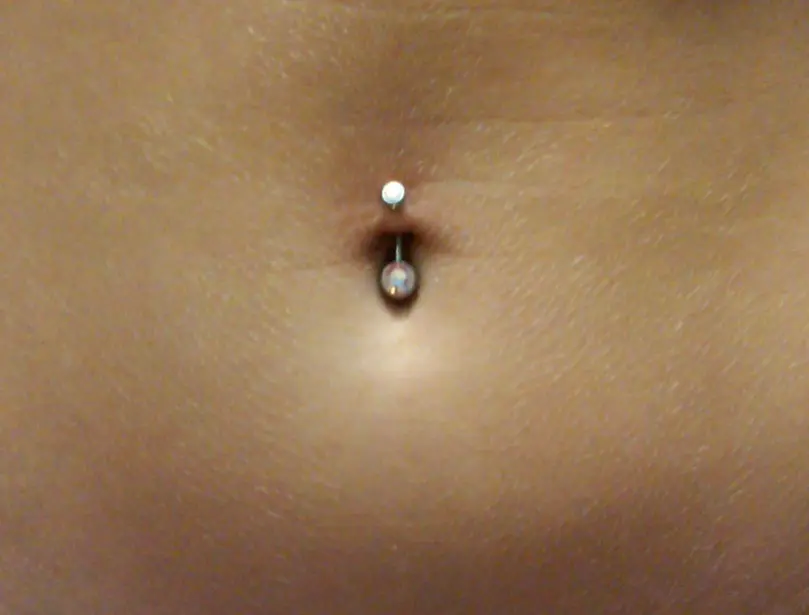
A belly button piercing is one of the less painful piercings, according to WebMD. The piercing itself is brief. The longer story is the soreness during a healing period that runs for many months.
What the sources say
| Source | Belly button piercing |
|---|---|
| WebMD | One of the less painful piercings |
| Healthline (ranking) | Among the less painful piercings, with ear, tongue and eyebrow |
| Healthline (belly button) | It is normal for the area to feel sore for a few days after the piercing |
| Cleveland Clinic | Even when it goes well, some tenderness, redness and crusting for 12 to 18 months |
| This site | 4 out of 10 |
How it compares
Our scale runs from 1 to 10, where 1 is a firm pinch you would barely register and 10 is the most painful thing you have experienced. It is applied to every placement, but it is an average and not a promise. See the pain chart.
| Piercing | Pain |
|---|---|
| Earlobe | 2/10 |
| Belly button | 4/10 |
| Floating navel | 4/10 |
| Helix | 4/10 |
| Nostril | 4/10 |
| Tongue | 5/10 |
| Nipple | 6/10 |
Healthline’s ranking puts belly button piercings among the less painful, and nipple piercings among the more painful. The pages we read give no scores, so ours are editorial estimates.
The long part
The pain of the piercing is over quickly. What lasts is soreness and irritation, and a belly button heals slowly. Healthline and WebMD both say up to a year, our guides give 24 to 52 weeks, and the Cleveland Clinic says tenderness, redness and crusting can continue for 12 to 18 months even when it goes well. How long a belly button piercing takes to heal explains the stages.
Clothing and pressure
WebMD says to wear clean, loose and soft clothes, because tight clothing and rough fabric will rub against the piercing. The Association of Professional Piercers (APP) advises avoiding friction and pressure from clothing and excessive motion of the area, which is what a waistband adds.
If the pain gets worse
Pain that increases, or does not settle, can mean infection. WebMD lists redness, swelling, yellow or green discharge, pain when you touch the site and fever. The Cleveland Clinic says not to remove the jewelry if you suspect an infection, except on medical advice. The APP says to see a doctor if you have severe redness, swelling or pain, or if symptoms last for a week or get worse. Irritated or infected piercing has a symptom table, and infected belly button piercing covers the navel.
Related
How to clean a belly button piercing explains what to use, and how much a belly button piercing costs covers the price. Does ear piercing hurt covers the ear.
Not medical advice
This page is educational. If a piercing is hot, has spreading redness, thick coloured discharge or red streaks, or you feel unwell, see a doctor the same day.
Frequently asked questions
Does a belly button piercing hurt?
Not much, by most accounts. WebMD says piercing your belly button is considered to be one of the less painful piercings, and Healthline's article on the most to least painful piercings places belly button piercings among the less painful ones. On our scale it is 4 out of 10.
How long is a belly button piercing sore?
Healthline says it is normal for the area to feel sore for a few days after the piercing. The Cleveland Clinic adds that even when it goes well, you can expect some tenderness, redness and even crusting at the spot for 12 to 18 months.
Is a belly button piercing more painful than an ear piercing?
It is more painful than a lobe and about level with a helix on our scale: 4 out of 10 against 2 for a lobe and 4 for a helix. Healthline's ranking places both ear and belly button piercings among the less painful.
Does a floating navel hurt more?
On our scale a floating navel is 4 out of 10, the same as a standard belly button piercing. The pages we read do not compare the two.
Can clothing make it hurt?
It can irritate it. WebMD says to wear clean, loose and soft clothes, because tight clothing and rough fabric will rub against the piercing, and Healthline says tight garments can irritate the area and trap bacteria. The APP advises avoiding friction and pressure from clothing.
What if the pain gets worse?
Increasing pain is a sign of possible infection. WebMD lists redness, swelling, yellow or green discharge, pain when you touch the site and fever, and the Cleveland Clinic says not to remove the jewelry if you suspect an infection except on medical advice. The APP says to see a doctor if you have severe redness, swelling or pain.
Sources
- WebMD - Belly button piercinghttps://www.webmd.com/beauty/belly-button-piercing
- Healthline - Belly button piercinghttps://www.healthline.com/health/belly-button-piercing
- Healthline - Most painful piercings to least painfulhttps://www.healthline.com/health/most-painful-piercings
- Cleveland Clinic - How to treat (and prevent) an infected belly button piercinghttps://health.clevelandclinic.org/infected-belly-button-piercing
- Association of Professional Piercers - Suggested aftercare for body piercingshttps://safepiercing.org/aftercare/
- Association of Professional Piercers - Troubleshootinghttps://safepiercing.org/troubleshooting/
This article is for education only and is not medical advice. If a piercing is hot, swollen, spreading redness, oozing yellow or green discharge, or you have a fever, see a doctor today.