On this page
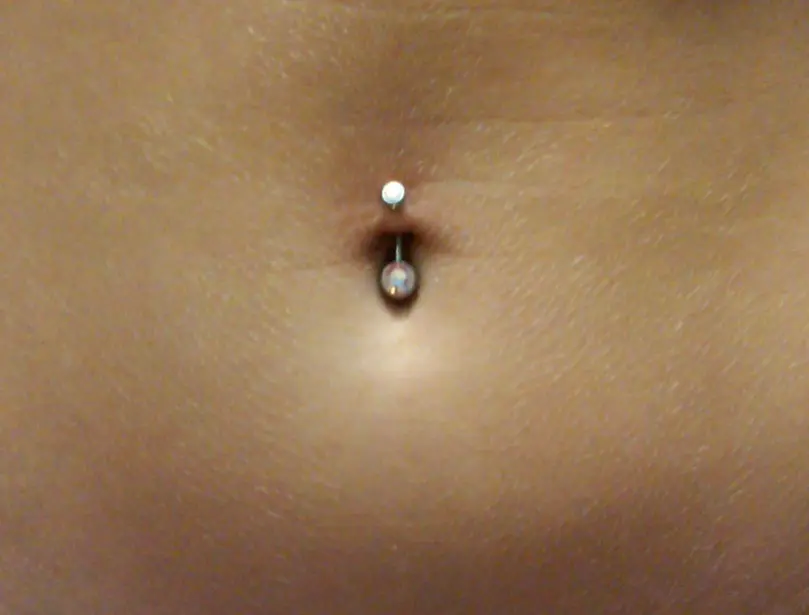
A belly button piercing is one of the piercings most likely to reject. It is not because you did anything wrong: the navel is a fold on a hinge, and almost everything about a normal day works against a piercing there.
The good news is that rejection is slow and it announces itself. Caught early, it can sometimes be stopped. Caught late, acting before the skin tears through leaves a far smaller scar.
Migration and rejection
The Association of Professional Piercers describes the two stages:
- Migration is when the jewelry moves closer to the surface, or the tissue between the openings gets narrower.
- Rejection is when the piercing migrates past the point where it can survive, or comes all the way to the surface.
They are the same process at different stages, and the aim is to notice it during the first one.
The signs
- The openings are getting closer together. The visible distance between the two ends shortens.
- The skin over the bar looks thin, shiny or stretched. You may be able to see the bar through it.
- The holes are widening or turning into slits.
- The jewelry sits at a new angle, or tips forward.
- The piercing is tender again after it had settled.
- The skin between the openings is flaking, peeling, red or inflamed.
The APP’s rule of thumb is that a piercing is past saving when the skin between the openings is flaking or inflamed, or when a quarter of an inch (about 6 mm) or less of tissue is left between them. Take a photograph every month with a ruler in the frame, so you can tell whether the gap is shrinking.
Rejection, irritation or infection
| Irritation bump | Rejection | Infection | |
|---|---|---|---|
| What you see | A small, red, pimple-like bump at one opening | Thinning skin, closer openings, tilting jewelry | Spreading redness, swelling, thick yellow or green discharge |
| Heat | Warm at most | Usually none | Hot to the touch |
| Speed | Appears, then settles | Slow, over weeks or months | Gets worse over days |
| You | Fine | Fine | Possibly feverish |
| What to do | Remove the cause, warm saline compresses | See your piercer | Leave the jewelry in, see a doctor |
The APP notes that removing jewelry from an infected piercing can trap the infection and cause an abscess, so quality jewelry should stay in so the infection can drain. Infected belly button piercing covers how to tell them apart.
Why navels reject
- Anatomy. A navel piercing needs a defined lip of skin above the belly button. If the fold flattens when you sit or bend, the jewelry is under tension all day. The belly button guide explains the anatomy check.
- Movement. Sitting, bending and stretching move the fold constantly.
- Clothing. Waistbands, belts and tight leggings press on the top of the piercing. A 2005 review in American Family Physician links friction from clothing and the resulting skin maceration to delayed healing and more infection.
- The wrong jewelry. A bar that is too short presses on the skin, and one that is too long or heavy drags. Dangling jewelry is a common cause of long-term migration.
- Changing jewelry too early, before the channel has matured.
- Pregnancy and extra abdominal weight. The same review notes that migration and rejection are more problematic in people who are overweight and in the later stages of pregnancy, when the abdomen stretches.
- Water and moisture, which slow healing and invite irritation.
What to do
- See your piercer as soon as you notice the signs, with your photographs. A piercer can judge the length of the bar, the tension and how much tissue remains.
- Take pressure off it. Loose or low-rise clothing, no dangles, no belts, and no sleeping face down.
- Have the jewelry checked. Sometimes the fix is a different length or a lighter, flatter piece. A floating navel bar suits navels that fold when you sit, and it can remove the pressure that was pushing the piercing out.
- Do not push it back or move it yourself. That adds trauma to tissue that is already thin.
- If the tissue is thin and it is not infected, take it out before it tears through. A tear leaves a much bigger scar than a removal.
If you need to keep the channel open in the meantime, for example during a pregnancy, a flexible retainer is an option.
What it leaves behind
A piercing removed early usually leaves two small marks. One that has worked its way to the surface leaves a longer line, and one that tears out leaves a larger scar. Piercing rejection covers what happens to a rejected piercing in general.
Can you re-pierce it
Sometimes. Let the skin close and heal fully before considering anything, which usually means several months.
Whether a second piercing works depends on why the first one failed. If the cause was fixable, such as jewelry that was too short, a piercer with the right bar may succeed. If the cause was your anatomy, piercing the same spot again generally fails the same way. Ask your piercer to be honest about which it was.
Preventing it
- Get the anatomy checked standing, sitting and bending forward.
- Use a curved barbell in implant-grade titanium, at the length your piercer chooses, and have it downsized at eight to twelve weeks.
- Keep waistbands off it for the whole of the healing period.
- Stay out of pools, hot tubs and the sea until it has healed.
- Save dangles for later, and wear them sparingly even then.
- Give it the full time. Six to twelve months is normal. How long a belly button piercing takes to heal gives the stages, and how much is a belly button piercing covers the cost of getting it right.
Not medical advice
This page is educational. If a piercing is hot, has spreading redness or coloured discharge, or you feel feverish or unwell, see a doctor the same day rather than waiting to see whether it is rejecting.
Frequently asked questions
How do I know if my belly button piercing is rejecting?
The distance between the two openings gets shorter, the skin over the bar looks thin or shiny and you may see the bar through it, the openings widen into slits, the jewelry sits at a new angle, and the piercing becomes tender again after it had settled. The Association of Professional Piercers also lists flaking, peeling or inflamed skin between the openings.
Why do belly button piercings reject so often?
Because of where they sit. The navel moves every time you sit or bend, clothing rubs it all day, and moisture collects in the fold. A 2005 American Family Physician review notes that friction and maceration slow healing and raise infection rates, and that migration and rejection are more of a problem in the later stages of pregnancy.
Should I take out a belly button piercing that is rejecting?
If it is rejecting and not infected, yes, once the tissue is thin. The Association of Professional Piercers says to give up on a piercing when the skin between the openings is flaking or inflamed, or when there is a quarter of an inch of tissue or less left. Removing it before it tears through leaves a much smaller scar.
Is it rejection or infection?
Rejection is gradual: the jewelry creeps toward the surface and the skin thins, usually without heat or pus. Infection brings heat, spreading redness, thick yellow or green discharge and sometimes a fever. For an infection, leave the jewelry in and see a doctor.
Can I re-pierce a belly button that rejected?
Sometimes, once the area has fully healed, which takes months. It depends on why it failed. If the cause was fixable, such as the wrong jewelry, a second try can work. If the placement or your anatomy was the cause, the same spot usually fails again.
Can I save a rejecting belly button piercing?
Sometimes, if it is caught early. Removing pressure, checking the length of the bar, and changing to a different style such as a floating navel bar can stop migration before the skin thins too far. Your piercer has to judge that in person.
Sources
- Association of Professional Piercers - Troubleshootinghttps://safepiercing.org/troubleshooting/
- American Family Physician - Complications of body piercing (Meltzer, 2005)https://www.aafp.org/pubs/afp/issues/2005/1115/p2029.html
- NHS - Infected piercingshttps://www.nhs.uk/conditions/infected-piercings/
- Association of Professional Piercers - Suggested aftercare for body piercingshttps://safepiercing.org/aftercare/
This article is for education only and is not medical advice. If a piercing is hot, swollen, spreading redness, oozing yellow or green discharge, or you have a fever, see a doctor today.