On this page
A belly button piercing takes six to twelve months to heal, and usually the full year. It is one of the slowest common piercings, and the reason is mechanical rather than biological: very little about an ordinary day leaves a navel alone.
It will look healed long before that. The openings settle within weeks and the crust comes and goes, but the channel through the fold of skin is still forming for months afterwards. Treating the first date as the second is how most navel piercings run into trouble.
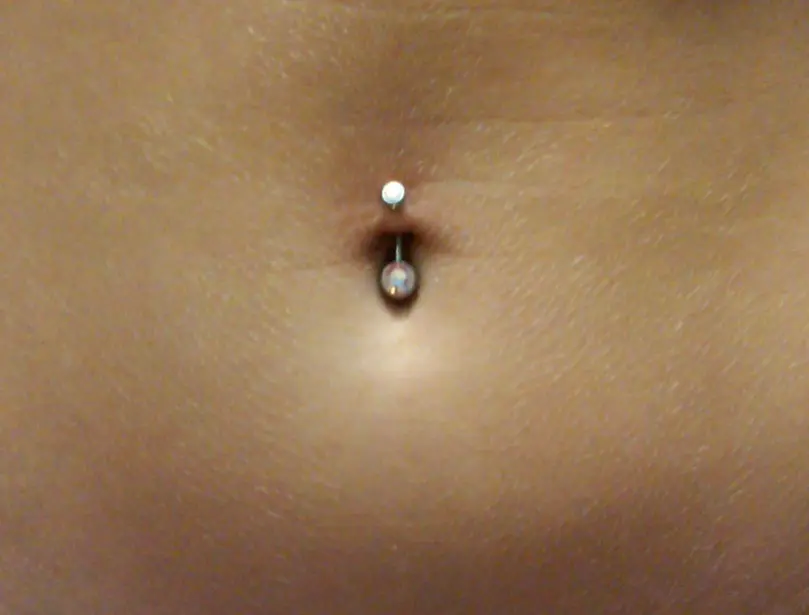
Photo by Jnagy3 via Wikimedia Commons, CC BY-SA 4.0.
Why navels are so slow
A belly button piercing runs through the fold of skin at the top of the navel, which puts it in a difficult spot:
- It sits on a hinge. Every time you sit, bend or stretch, the fold moves and the jewelry moves with it.
- Clothing presses on it. Waistbands, belts and leggings sit right on or just above it for most of the day.
- It stays warm and damp. The navel holds sweat and water, which is hard on a healing wound.
- It is easy to knock. Seatbelts, bags, pets and sleeping face down all find it.
None of that is dangerous in itself. Together, it simply means the channel keeps getting disturbed while it is trying to form.
Stage by stage
Week 1. Swelling, tenderness and some redness around both openings. Clear or whitish discharge that dries to a crust is normal. It will be sore when you bend or sit down.
Weeks 2-8. The swelling eases and crusting settles into a routine. Tenderness when bending fades gradually. Bruising around the piercing in the early weeks is common and clears on its own.
Weeks 8-12. The swelling has gone, which is when the long starter bar is swapped for a shorter one. Have your piercer downsize it: a long bar catches on every waistband and keeps moving in the channel.
Months 3-6. The piercing looks healed and feels mostly fine. It is not finished. Light crusting still comes and goes, and this is when people relax, change their jewelry, go swimming, and set it back.
Months 6-12. The channel toughens and matures. Crusting stops, tenderness goes, and by the end of this stretch most navels are genuinely healed.
Looks healed or is healed
A navel piercing is healed when all four of these are true, not three:
- No tenderness, including when you press gently beside it or bend.
- No discharge or crusting for at least two weeks.
- No redness or pink tinge around either opening.
- The jewelry moves freely without any tugging.
If one fails, give it another month and check again. On a navel it can take the full year.
When you can get back to things
| Activity | When |
|---|---|
| Showering | Straight away, rinsing the piercing and patting it dry |
| Gentle exercise | Within days, in loose clothing, showering afterwards |
| Downsizing the bar | 8-12 weeks, done by your piercer |
| Sleeping on your stomach | Once it is healed |
| Swimming, baths and hot tubs | Once it is healed |
| High-waisted jeans and tight waistbands | Ideally once it is healed |
| Changing jewelry yourself | Once it is healed, at 6-12 months |
| Dangly or heavy jewelry | Once it is healed, and sparingly |
Floating navels heal on the same timeline
A floating navel uses a bar with a flat disc on the lower end, for navels that are shallow or fold when you sit. The flat disc takes pressure off the piercing, which gives it a better chance of healing steadily, but it does not make the channel mature any faster. Expect six to twelve months.
What sets healing back
- Water. Pools, hot tubs, lakes and the sea are the most common single cause of infected navel piercings.
- Waistbands. Friction from jeans, leggings and belts irritates the openings all day.
- Sweat left sitting in the fold, especially under tight gym clothes.
- Changing the jewelry early, which drags metal through a channel that has not finished forming.
- Sleeping face down, which presses the bar into the fold for hours.
- Touching it and turning it. Every touch brings bacteria, and turning the bar drags crust through the channel.
- Poor-quality jewelry. Plated or mystery metal and externally threaded bars cause long-term irritation. See the materials guide.
- Harsh products. Alcohol, hydrogen peroxide, tea tree oil and ointments damage the tissue that is trying to heal.
The routine that actually helps is short: sterile saline twice a day, pat the fold dry with clean paper towel, and otherwise leave it alone. The aftercare guide covers the details.
Signs it is not going to plan
- Spreading redness, heat, thick yellow or green discharge, or pain that is getting worse can mean infection. See a doctor promptly and leave the jewelry in unless they tell you to take it out. Infected belly button piercing explains how to tell irritation from infection.
- A bar that sits closer to the surface than it did, with the skin over it thin or shiny, is migration. Navels reject more often than most non-surface piercings, and a piercer should see it promptly. See belly button piercing rejection.
- A small pink lump beside an opening is usually an irritation bump with a cause you can remove, such as a waistband or a bar that needs downsizing. See piercing bumps.
Pregnancy during healing
A navel piercing that is still healing when the abdomen starts to stretch is under a lot of strain. If you are pregnant or planning to be, talk to your piercer about timing, and about switching to a flexible retainer. The belly button piercing guide covers pregnancy in more detail.
The whole budget, including the downsize and jewelry changes over the year, is in how much is a belly button piercing.
A healing piercing should stay out of pools, hot tubs and the sea: see swimming with a new piercing. Most piercings also need a shorter post fitted while they heal, so read piercing downsizing too.
Not medical advice
This page is educational. If a piercing is hot, has spreading redness or coloured discharge, or you feel feverish or unwell, see a doctor rather than waiting it out.
Frequently asked questions
How long does a belly button piercing take to heal?
Six to twelve months, and often the full year. It usually looks healed within a couple of months, but the channel through the fold of skin takes far longer to mature.
Why does a belly button piercing take so long to heal?
Because nothing leaves it alone. The navel sits where your body bends, so sitting, bending and stretching move it all day. Waistbands press on it, sweat collects in the fold, and every one of those slows healing.
When can I change my belly button ring?
Not until it is fully healed, at six to twelve months. The exception is the downsize at eight to twelve weeks, when your piercer swaps the long starter bar for a shorter one. Dangly jewelry should wait until the piercing has healed.
When can I swim with a belly button piercing?
Only once it has fully healed. The APP advises avoiding submerging a healing piercing in lakes, pools, oceans and hot tubs, or protecting it with a waterproof transparent film dressing, which it says suits navel piercings.
Is it normal for a belly button piercing to still crust after months?
Yes. Light crusting of dried lymph comes and goes for months while the channel matures. It only needs attention alongside signs of infection, such as spreading redness, heat, thick yellow or green discharge, or pain that is getting worse.
Can I exercise with a new belly button piercing?
Yes, with some care. Core exercises move the piercing constantly, and sweat trapped under tight waistbands irritates it. Wear loose clothing, shower soon after training, and expect a few tender days if you go straight back to hard ab work.
Sources
- Association of Professional Piercers - Suggested aftercare for body piercingshttps://safepiercing.org/aftercare/
- Association of Professional Piercers - Troubleshootinghttps://safepiercing.org/troubleshooting/
- Association of Professional Piercers - Jewelry for initial piercingshttps://safepiercing.org/jewelry-for-initial-piercings/
- NHS - Infected piercingshttps://www.nhs.uk/conditions/infected-piercings/
This article is for education only and is not medical advice. If a piercing is hot, swollen, spreading redness, oozing yellow or green discharge, or you have a fever, see a doctor today.