On this page
An eyebrow piercing takes two to four months to heal. That is quick next to cartilage, and it comes with a catch: it is a surface piercing, so it heals as a shallow channel through a pinch of skin and stays easy to snag the whole time.
Stage by stage
Week 1. Swelling and tenderness, sometimes bruising around the eye. That is unnerving but ordinary. It bleeds a little more than most piercings, because the area has many small blood vessels.
Weeks 2-8. Crusting on the ends, less tenderness, and the swelling drops. Downsize at four to six weeks. The starter barbell is long because eyebrows swell, and once the swelling has gone that spare length catches on towels, hairbrushes and hoodies.
Months 2-4. Settled, but still snaggable. This is the stretch where a hoodie, a towel or a ring can set it back.
Placement changes the odds
The standard eyebrow sits at the outer third of the brow, angled to follow the brow line. That angle puts the channel across the direction the skin moves, which is more stable.
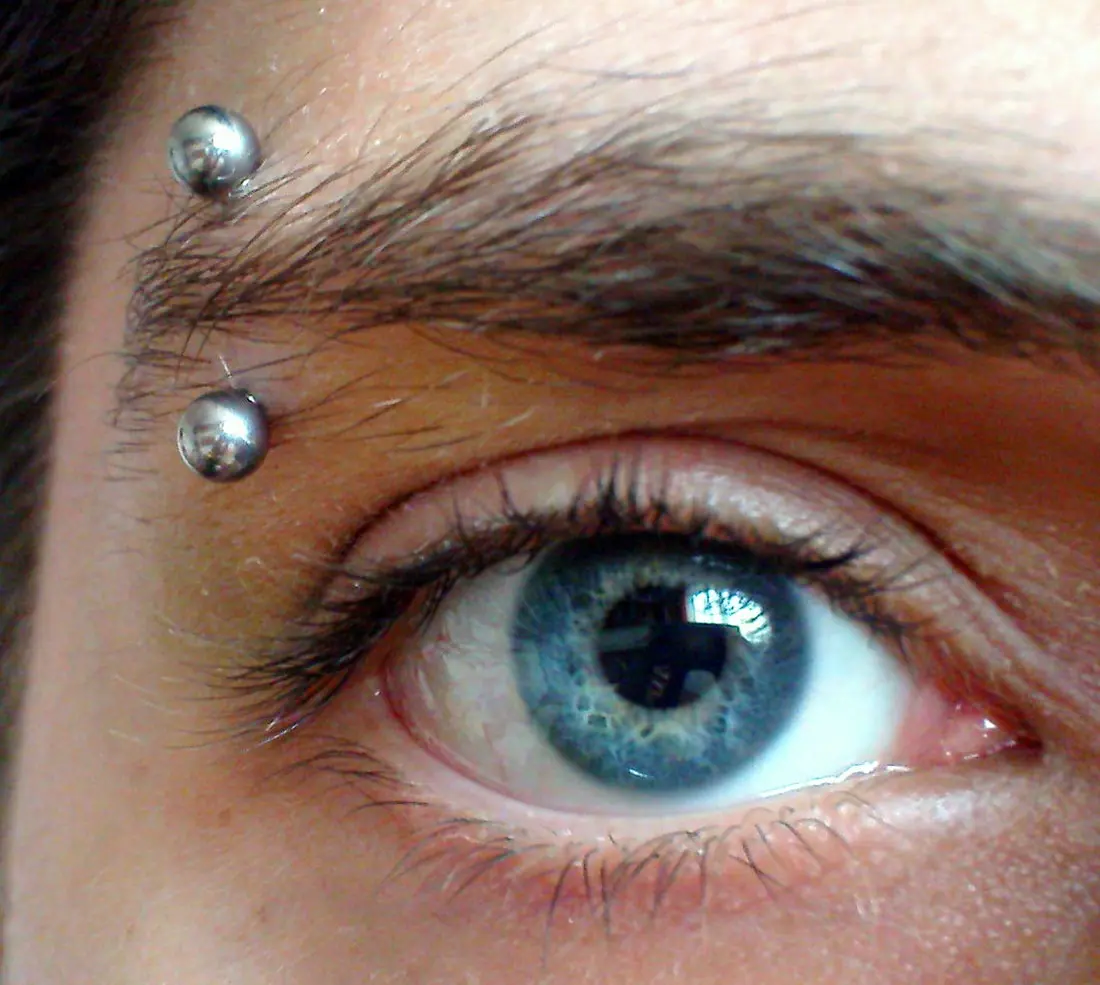
- Vertical eyebrow. One end above the brow and one below, crossing the brow line. It heals on the same timescale.
- Horizontal eyebrow. Both ends visible on the same plane along the brow. It carries a higher migration risk.
- Anti-eyebrow. On the cheekbone below the eye, not the brow. It takes three to six months, and the anti-eyebrow guide explains why.
Why the figures vary
A 2005 review of body piercing complications in American Family Physician gives six to eight weeks for the eyebrow. That matches the low end of the range above and describes the point at which a piercing stops being a fresh wound.
Piercers use two to four months because the channel is still finishing after that, and a surface piercing that has not fully settled is exactly the kind that migrates.
What slows an eyebrow piercing down
- Snagging. Towels, hoodies and hairbrushes are the enemies. Pat dry rather than rubbing, and use paper towel on that area for the first few weeks.
- Makeup. Foundation, concealer, brow pencil, gel and powder push into the channel. Keep them off it and around it until it heals, and rinse with saline afterwards.
- A long bar. Downsize on time.
- Hair. A fringe that sweeps over the brow drags on the jewelry all day. Pin it back.
- Glasses and sunglasses, which can knock the outer end.
- Sleeping on it.
- A ring, or any jewelry change, before it has healed.
- Touching and turning.
The routine is short: sterile saline twice a day, hands off, and no rotating. The aftercare guide covers the rest.
How to know it is healed
An eyebrow piercing is healed when all four of these are true:
- No tenderness when you press gently beside the jewelry.
- No discharge or crusting for at least two weeks.
- No redness or pink tinge at either opening.
- The jewelry moves freely, with no tugging.
If one fails, wait another month and check again. Looking healed does not mean being healed, and the healing time guide explains the difference.
Watch for migration
Because it is a surface piercing, the body can gradually push the jewelry toward the surface. The Association of Professional Piercers describes it as the jewelry moving closer to the surface, or the tissue between the openings getting narrower. Watch for:
- The visible distance between the ends getting shorter.
- The skin over the bar looking thin or shiny, or the bar showing through.
- The piercing becoming tender again after it had settled.
- The jewelry sitting at a different angle.
Any of those means see your piercer. Sometimes a different bar size or a change of habits stops it. If the skin is very thin, removing the jewelry before it tears through leaves a far smaller mark. Eyebrow piercing scar explains what to expect, and surface piercings explains why they reject.
Infection near the eye
Take infection seriously here. Heat, spreading redness, swelling of the eyelid, thick coloured discharge or a fever means a doctor the same day. The NHS advises leaving jewelry in an infected piercing unless a doctor tells you to take it out.
Jewelry and cost
The right jewelry is a 16 gauge curved barbell in implant-grade titanium, and eyebrow piercing jewelry covers sizes and when a ring is safe. A piercing costs $30 to $70, and how much is an eyebrow piercing adds up the first year. The eyebrow piercing guide has the whole picture.
A healing piercing should stay out of pools, hot tubs and the sea: see swimming with a new piercing. Most piercings also need a shorter post fitted while they heal, so read piercing downsizing too.
Not medical advice
This page is educational. If a piercing is hot, has spreading redness or coloured discharge, or you feel feverish or unwell, see a doctor rather than waiting it out.
Frequently asked questions
How long does an eyebrow piercing take to heal?
Two to four months. It is a surface piercing, so it heals as a shallow channel through skin rather than deep tissue, and it stays vulnerable to snagging for the whole time. It can look settled within weeks.
Why do some sources say six to eight weeks?
A 2005 American Family Physician review gives six to eight weeks for the eyebrow, which matches the low end of the two to four month range. That is the point at which it stops being a fresh wound. The rest of the range is the channel finishing, which is when a snag or an early ring can set it back.
When should I downsize an eyebrow piercing?
At four to six weeks, once the swelling has gone. Eyebrows swell noticeably at first, so the starter barbell is long. When the swelling drops, that spare length is exactly what a towel catches.
Can I wear a ring in a healing eyebrow piercing?
No. A ring moves more than a curved barbell, and movement is what makes a surface piercing migrate. Wait until it is fully healed, four months at the earliest, and accept the higher migration risk.
Does an anti-eyebrow take longer to heal?
Yes. An anti-eyebrow is a different piercing, on the cheekbone below the eye, and it takes three to six months. It is a surface piercing with a shaped bar and a higher migration risk.
How do I know if my eyebrow piercing is migrating?
The distance between the two ends gets shorter, the skin over the bar looks thin or shiny, it becomes tender again after settling, or the jewelry sits at a different angle. See your piercer promptly. Removing it before it tears through leaves a much smaller mark.
Sources
- Association of Professional Piercers - Suggested aftercare for body piercingshttps://safepiercing.org/aftercare/
- Association of Professional Piercers - Troubleshootinghttps://safepiercing.org/troubleshooting/
- American Family Physician - Complications of body piercing (Meltzer, 2005)https://www.aafp.org/pubs/afp/issues/2005/1115/p2029.html
- NHS - Infected piercingshttps://www.nhs.uk/conditions/infected-piercings/
This article is for education only and is not medical advice. If a piercing is hot, swollen, spreading redness, oozing yellow or green discharge, or you have a fever, see a doctor today.