On this page
There is no medically better side for any piercing. Both nostrils are the same tissue, both ears are the same anatomy, and neither side heals faster than the other.
What there is, is a set of practical considerations that genuinely should decide it, and a set of myths that should not. This page covers both, because people arrive at this question having read the myths.
The four things that should decide it
1. Which side you sleep on
This is the most useful item on the list and the one people forget.
A healing piercing pressed into a pillow every night is the single commonest cause of irritation bumps, and it applies to cartilage piercings for six to twelve months, not a fortnight.
If you reliably sleep on your left, pierce the right. If you sleep on both, buy a travel pillow with the hole positioned under your ear before the appointment.
2. Which side already has something healing
If you already have a healing piercing, put the next one on the other side, or wait.
Two healing cartilage piercings on the same ear means that side is unavailable for months and you have nowhere to go. This is the practical constraint that shapes every curated ear plan.
3. Your habits
- Phone. Which ear do you hold it to? A healing tragus, helix or conch meets a phone constantly.
- Hair. Which way does your parting fall, and which side does your hair cover? A piercing hidden under hair is both less visible and more likely to catch.
- Glasses. The arms cross both ears, but frames often sit slightly differently on each side.
- Which shoulder you carry a bag on, for anything on the neck or chest.
4. What it looks like on your face
Faces are not symmetrical, and it usually shows more than people expect on facial piercings.
Ask your piercer to hold a piece of jewelry against each side and look in a mirror, head-on and in profile. For a nostril, a monroe or an eyebrow, this two-minute exercise settles the question better than any rule.
The myths, and where they came from
The ear that “means something”
In the 1980s and 1990s a rumour circulated in parts of the English-speaking world that which ear a man pierced signalled his sexuality, usually with the right ear as the marker.
It was never consistent between countries or even between towns, it was frequently used to bully people, and it has no currency today. Pierce whichever ear you like. If someone tells you a side means something, they are repeating a playground rumour from forty years ago.
The nostril and traditional meaning
This one is different, because there is a genuine cultural practice behind it rather than a rumour.
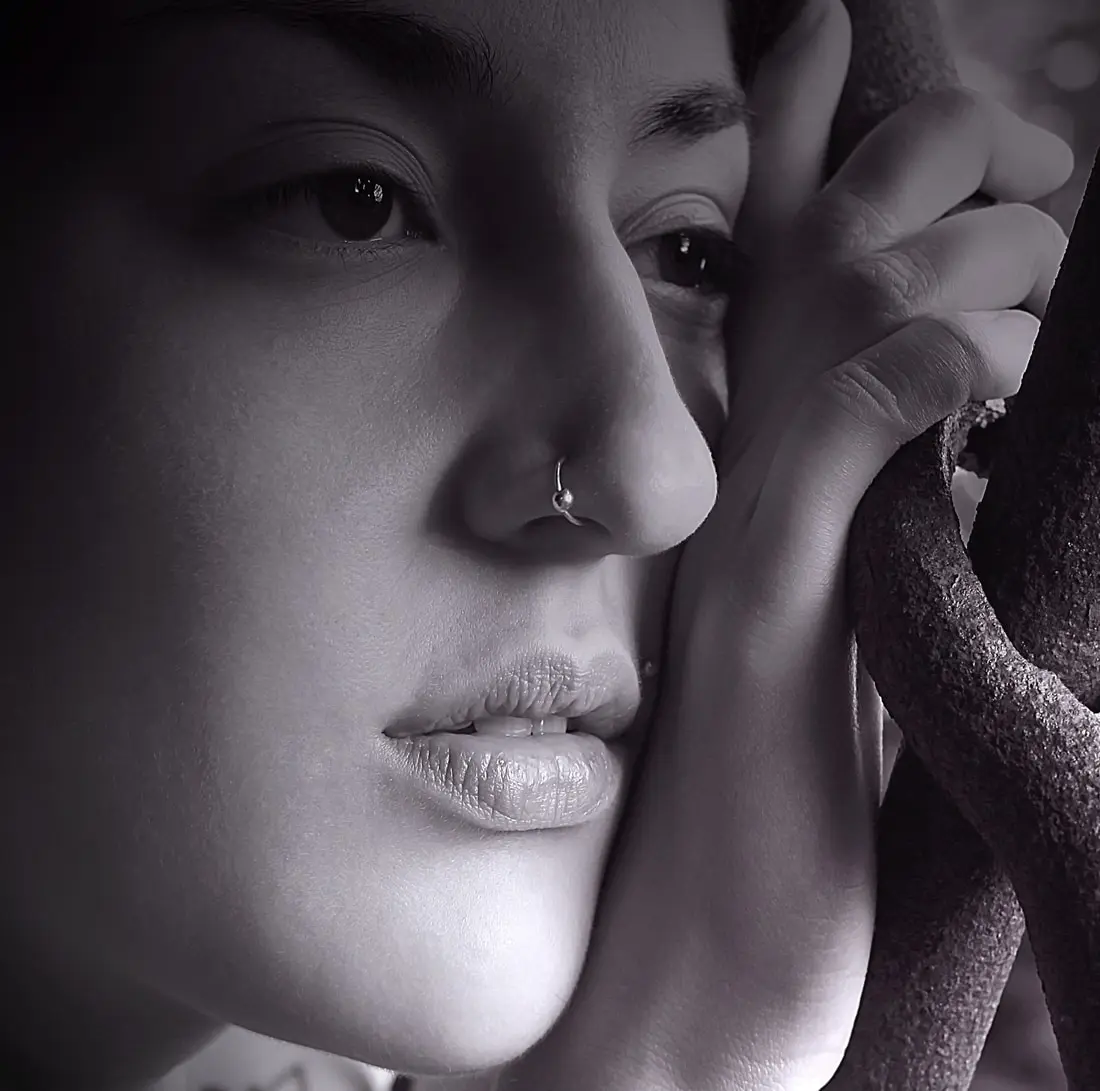
In parts of South Asia, and in Ayurvedic tradition, the left nostril is conventionally pierced, and the practice carries specific cultural and sometimes religious significance. Similar conventions exist elsewhere.
Two things follow. If that tradition is yours, it may well matter to you and to your family, and that is a good reason to choose a side. If it is not yours, the tradition does not attach a general meaning to your nostril piercing, and you should not feel bound by it.
What is not supported is the claim that piercing a particular nostril produces a health effect. That idea travels alongside the tradition in some online retellings, and there is no evidence for it.
“One side hurts less”
No. Same tissue, same needle, same procedure. Any difference you notice is individual variation or the order you had them done in, not a property of the side.
Doubles: matching or mirroring
If you already have one and are adding a second, there are two different looks.
Matching, meaning the same placement on both sides, reads as symmetrical and deliberate. It works best for placements that sit at the same height on the face, such as paired nostrils or paired lobes. Double nostril covers both paired and stacked nose piercings, and a side labret is the one-sided lip version.
Mirroring, meaning a different placement on the other side, balances the face without repeating itself. This is what most curated ears do, and it is why the two ears in a good curation rarely match exactly.
Whichever you choose, have the piercer mark it and look before committing. A second piercing measured to match the first often does not look matched, because your face is not symmetrical.
If you genuinely cannot decide
Two reasonable tiebreakers:
Pierce the side you do not sleep on. It removes the most common healing problem, and you will have forgotten which side you agonised over within a month.
Ask the piercer. They look at faces all day, and they have no stake in the answer. Most will tell you honestly if one side suits you better, and quite often the answer is that it makes no difference at all.
The other planning guides, on combinations, sides and what to get first, are collected under trends.
Frequently asked questions
Which side should I pierce my nose?
Whichever side suits your face and your habits. There is no medical difference between nostrils. Look at which side you sleep on, which side you hold a phone, how your hair falls and which side of your face you prefer in photographs.
Does the side of a nose piercing mean anything?
Not in most of the world today. Some traditions attach meaning to a particular side, notably in parts of South Asia where the left nostril is traditionally pierced, and that is worth respecting if it applies to you. Outside those contexts it carries no general meaning.
Does which ear you pierce mean you are gay?
No. That was a Western playground rumour from the 1980s and 1990s claiming the right ear signalled something about a man's sexuality. It was never true anywhere consistently, and it has no currency now. Pierce whichever ear you like.
Which nostril is less painful to pierce?
Neither. The two nostrils are the same tissue and the same procedure, and any difference you feel is individual rather than a property of the side.
Should I match a piercing to the side I already have one on?
It depends on the look. Matching creates symmetry; the opposite side creates balance across the face. Ask your piercer to hold jewelry against both and look in a mirror before deciding, because faces are not symmetrical and it often shows.
Which side is better if I sleep on my side?
The side you do not sleep on. This is the most practical consideration on the list and the one people most often forget, because a healing piercing pressed into a pillow every night is the commonest cause of irritation bumps.
Sources
- Association of Professional Piercers - Suggested aftercare for body piercingshttps://safepiercing.org/aftercare/
- Association of Professional Piercers - Jewelry for initial piercingshttps://safepiercing.org/jewelry-for-initial-piercings/
- American Academy of Dermatology - Caring for pierced earshttps://www.aad.org/public/everyday-care/skin-care-basics/tattoos/caring-for-pierced-ears